(AMD) Advanced Micro Devices
What It Does, What's Moving the Price, and How Investors Can Frame the Risk

If you follow AI and data center spending, AMD is hard to ignore. In March 2026, the stock sits around $203 per share, and the company's market cap is roughly $330B to $331B. That puts AMD among the largest publicly traded semiconductor names, and semiconductors sit at the center of today's AI buildout.
AMD also touches everyday tech. Its chips power laptops, gaming PCs, servers, and consoles. So you get a mix of long-cycle enterprise demand and more emotional consumer demand.
This post keeps it practical. You'll get a plain-English view of AMD's business, what the latest snapshot says about performance, where the risks live (volatility is real here), and a simple way to think about buying, holding, or waiting.
What AMD actually does, and why its chips matter for AI and everyday computing
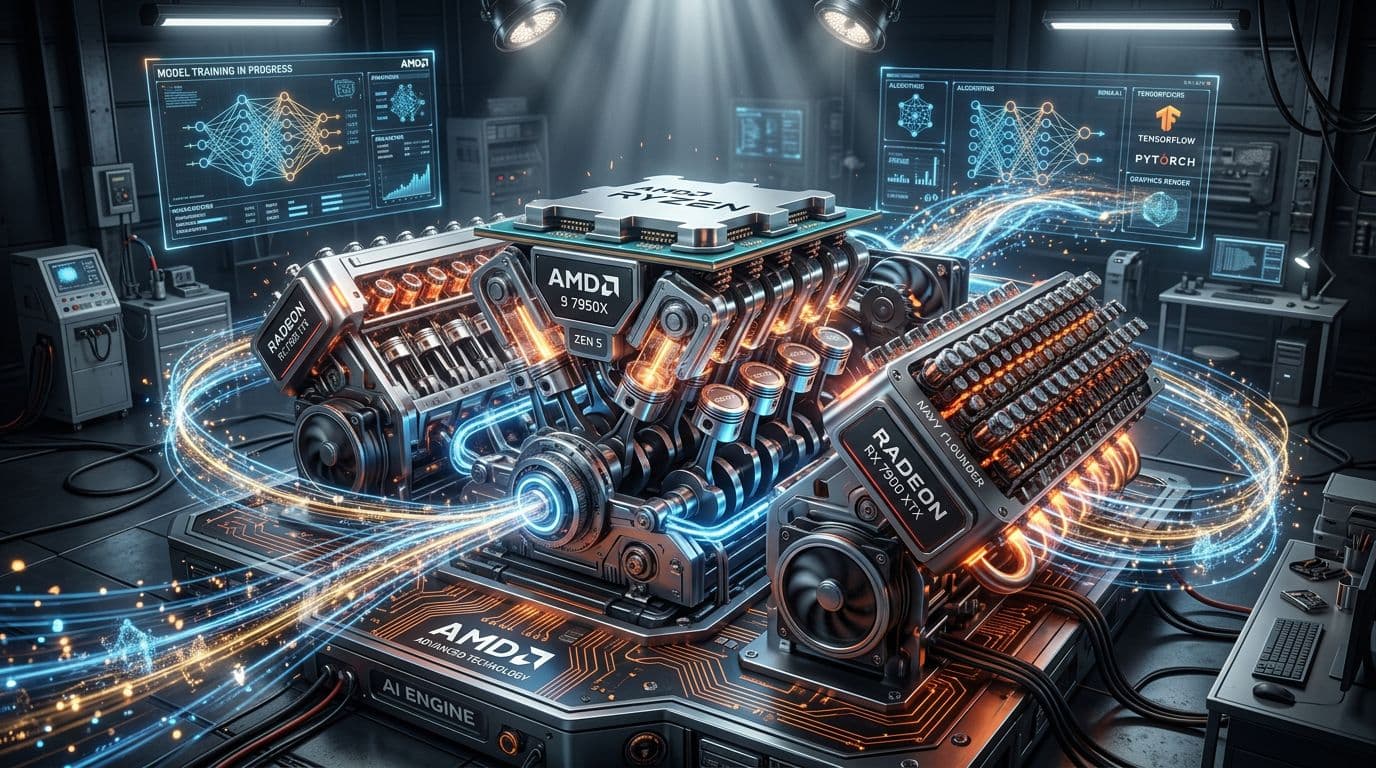
AMD designs high-performance chips that act like the "engines" inside modern computing. Some engines are tuned for general tasks (CPUs). Others focus on heavy graphics and parallel work (GPUs). In AI, that parallel work matters because training and running models often means doing many calculations at once.
That's why investors watch AMD closely when AI and cloud spending heats up. Data centers buy chips in big batches, and a single platform win can last years. At the same time, consumer cycles still matter. PC upgrades and gaming demand can swing quarter to quarter.
AMD's importance comes from where its products land:
- AI and data centers need compute density, power efficiency, and fast memory access.
- Everyday PCs need strong performance per dollar and good battery life.
- Creators and gamers need fast graphics, smooth frame rates, and stable drivers.
A useful mental model is this: semiconductors are the picks and shovels of modern computing. AI might be the "gold rush," but chips are what actually move the dirt.
Ryzen PCs, EPYC servers, and Radeon graphics, the simple map of AMD's lineup
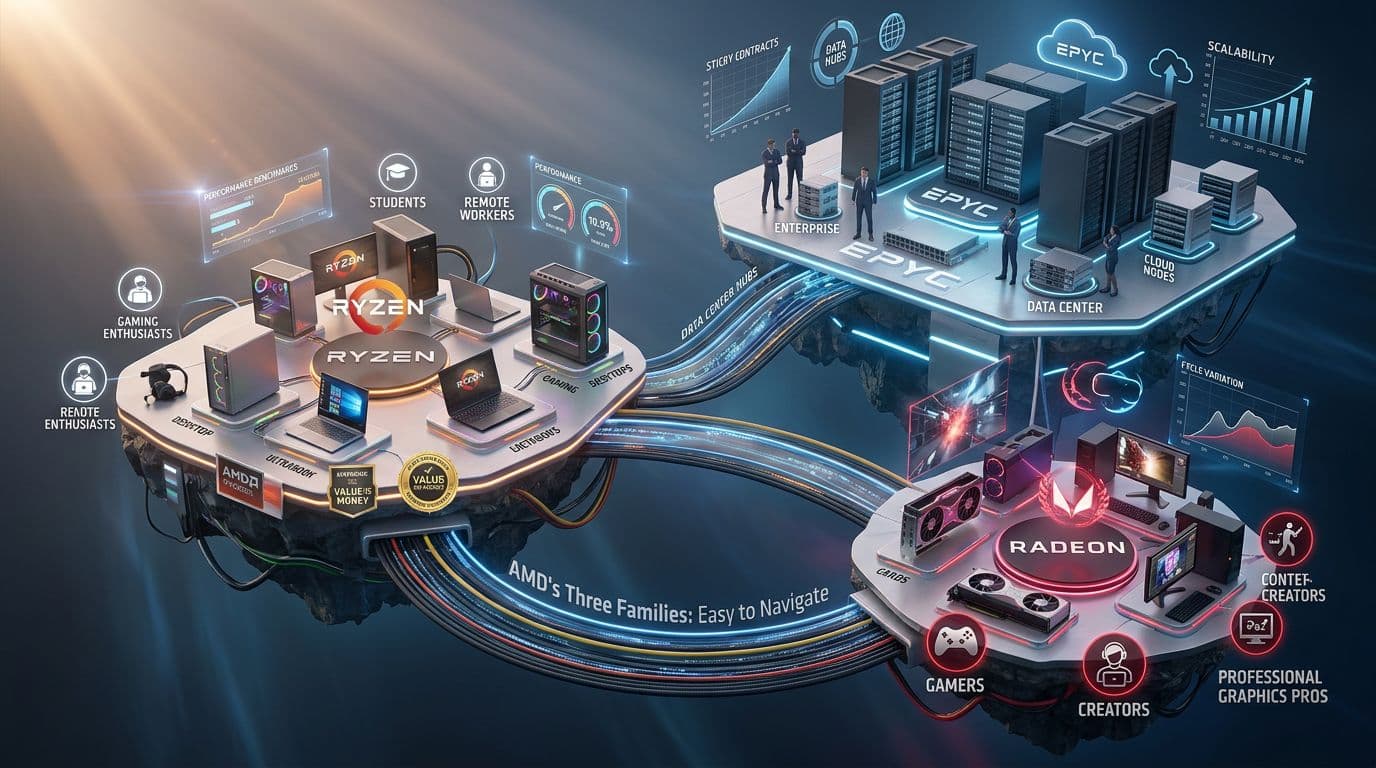
AMD's lineup is easier than it looks. It's mainly three families, each tied to a different buyer type.
- Ryzen (PC CPUs): For laptops and desktops. Buyers include students, remote workers, and enthusiasts who want strong performance for the money.
- EPYC (server CPUs): For cloud providers, enterprises, and data centers. EPYC matters because server contracts tend to be sticky, and wins can scale fast.
- Radeon (GPUs): For gaming and content creation. Radeon also plays in professional graphics, although results can vary by cycle.
What does this mean for investors? AMD doesn't rely on one end market. That helps, but it also creates cross-currents. PCs can be weak while servers hold up, or gaming can slow while AI-related demand stays firm.
EPYC deserves special attention because it sits where budgets are large and switching costs are high. If a cloud customer standardizes on a platform, they often buy around it for years (hardware, software tuning, staff skills). That can support a steadier revenue base than consumer categories.
How AMD built its platform, ATI for graphics, Xilinx for adaptive chips, and Nod.ai for AI software

AMD has been around since 1969, but the modern AMD story is about focus and smart expansion. Several big moves shaped what investors see today:
- ATI (2006) brought AMD deeper into graphics, which later became a core pillar as GPUs grew in importance for gaming and compute.
- Xilinx (2022) added adaptive computing (often grouped under FPGAs), which can fit specialized workloads in communications, embedded systems, and some data center use cases.
- Nod.ai (2023) strengthened AMD's AI software capability, which matters because hardware alone rarely wins long term. Developers stick with platforms that feel easier to use.
Leadership also matters. Under CEO Lisa Su, AMD rebuilt credibility with product execution and a clearer roadmap. Investors don't need a biography to understand the point: in semiconductors, consistent delivery often shows up as better design wins and better pricing power over time.
A quick look at AMD's latest numbers, what improved, and what the market is worried about

Stock prices don't move on "good" or "bad" numbers alone. They move on the gap between expectations and the new story investors tell themselves after earnings. That's why a strong quarter can still be followed by a drop, especially if guidance cools.
From the snapshot provided, AMD's March 2026 trading context looks like this: the stock is around $203, after a stretch of volatility. Some periods show quick one-week strength, while one-month and three-month windows can still look soft. That kind of path is common for high-beta semiconductors.
On fundamentals, investors usually watch four simple things:
- Revenue growth (is demand expanding?)
- Margins (is AMD keeping enough profit as it scales?)
- Cash generation (does growth translate into real cash?)
- Guidance (what does management expect next?)
Keep one more idea in mind: data center demand can be strong even when gaming or PCs slow. So the mix matters as much as the total.
Earnings are a scoreboard, but guidance is the weather report. Stocks often trade more on the forecast than the score.
Q4 2025 was strong, revenue hit $10.3B and EPS came in at $1.53
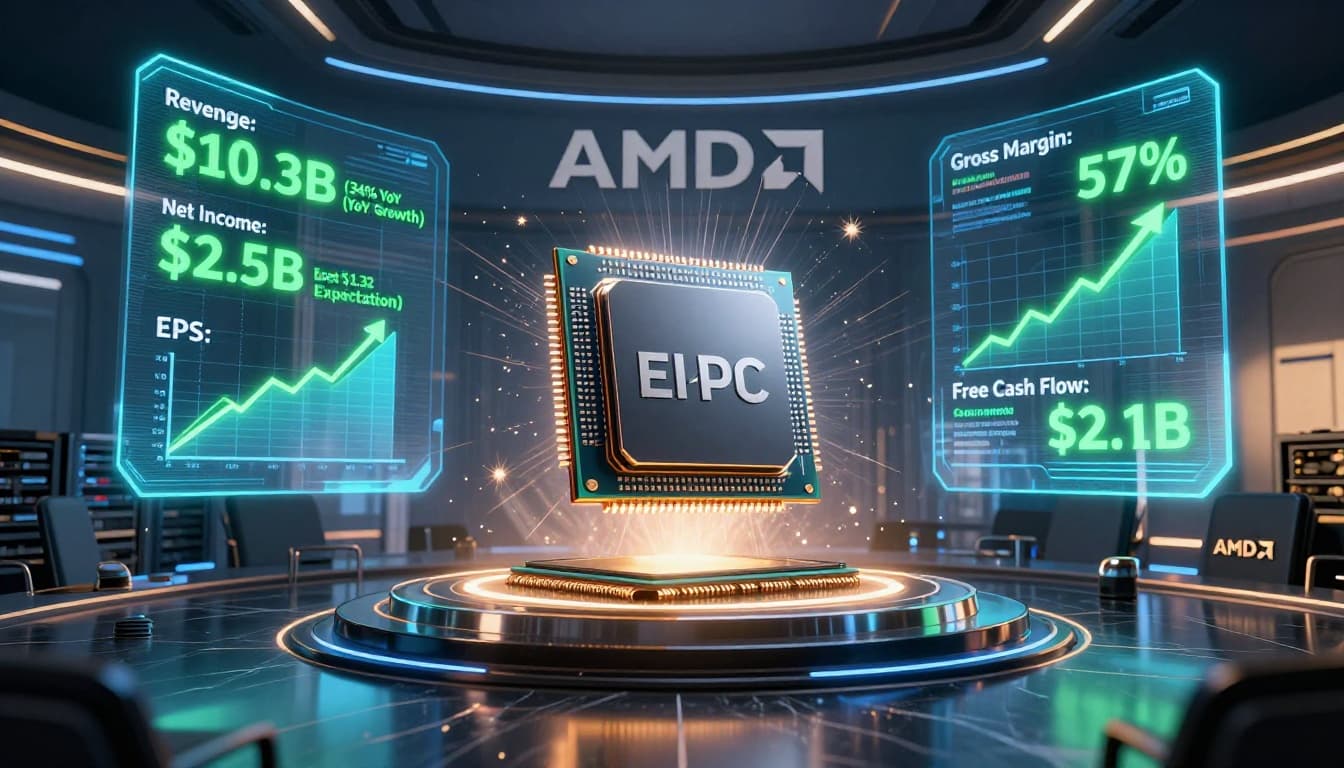
Based on the provided results, AMD's Q4 2025 showed solid momentum:
- Revenue: $10.3B (about 34% year-over-year growth)
- Net income: $2.5B (about 42% year-over-year growth)
- EPS: $1.53, above the $1.32 expectation referenced in the snapshot
- Gross margin: 57%
- Free cash flow: $2.1B
Those figures matter for a simple reason: they show AMD can grow while still producing meaningful profit and cash. Semiconductors are capital-heavy across the ecosystem, so cash gives flexibility (R&D, supply commitments, acquisitions, buybacks).
The full-year 2025 totals in the same snapshot also look strong:
- Revenue: $34.6B
- Net income: $4.3B
- EPS: $2.65 (with a note that an alternate EPS figure also gets reported, which is common when companies show GAAP and non-GAAP views)
Even with those results, investors still need to ask where growth is coming from next, and whether it's durable.
Q1 2026 guidance is softer, and gaming chip sales may fall in 2026

Here's where sentiment can turn quickly. The provided outlook calls for Q1 2026 revenue around $9.8B, plus or minus $0.3B. That's not a collapse, but it's softer than the kind of straight-line acceleration that momentum traders love.
The snapshot also flags a risk in gaming: AMD warned that semi-custom gaming chip sales could fall by a significant double-digit percentage in 2026. Semi-custom can be lumpy because it often ties to console cycles. When a cycle matures, unit demand can fade, and pricing can tighten.
That mix shift explains why the stock can drop even after a beat. In the provided summary, shares fell roughly 7% to 8% after earnings, which fits the classic pattern of "good quarter, cautious forward tone."
For investors, the takeaway isn't to panic. It's to separate:
- What just happened (a strong quarter)
- What might happen next (a softer near-term setup in some segments)
Valuation, chart levels, and risk, how to think about AMD as a higher-volatility stock
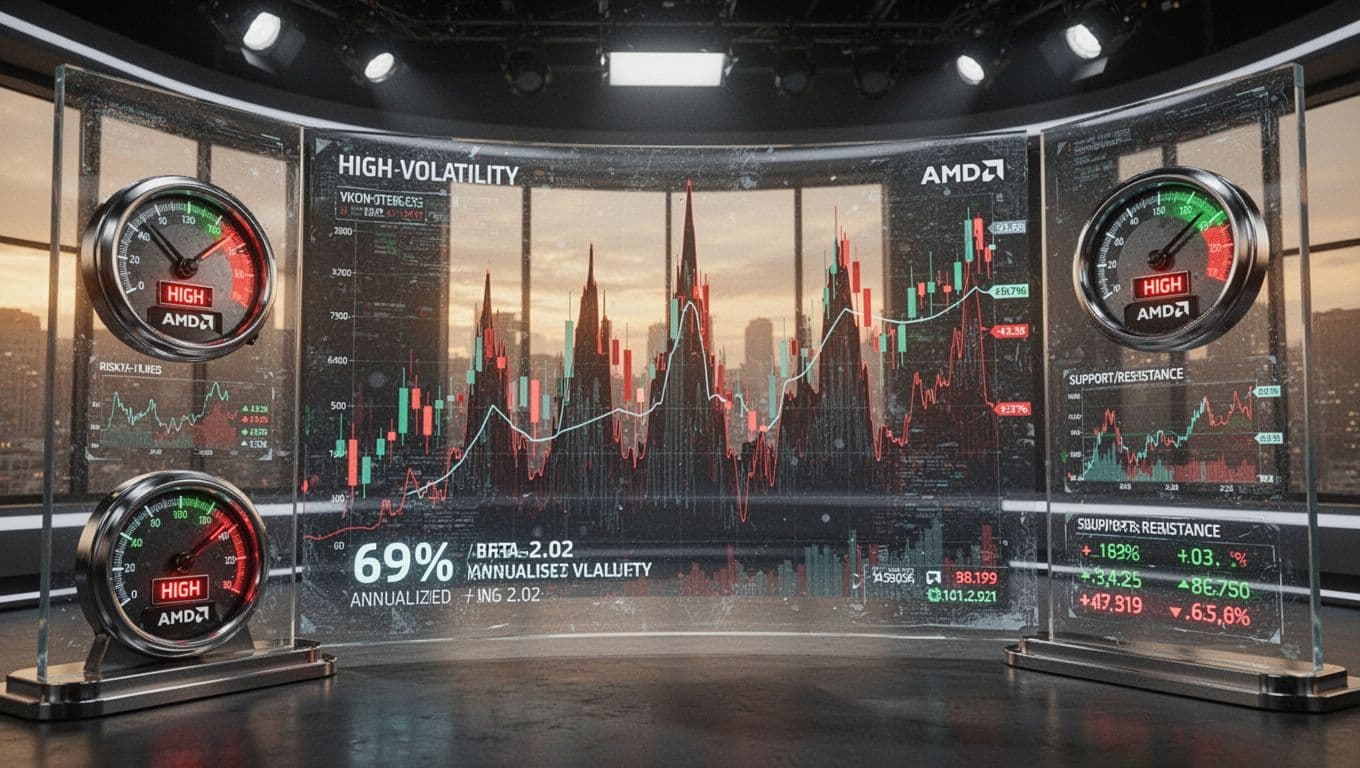
AMD can reward patience, but it rarely feels calm. The data provided labels risk as high, and the market behavior backs that up. AMD's beta is about 2.02, meaning it has tended to move about twice as much as the broader market. Annualized volatility around 69% reinforces that point.
That volatility creates two different experiences:
- Long-term investors can see big drawdowns that test conviction.
- Active investors can find opportunity inside wide trading ranges.
A balanced approach starts with three lenses: ratings (sentiment), chart levels (what traders watch), and valuation (what you're paying for earnings power).
To ground that discussion, here's the key snapshot in one place.
| Metric (March 2026 snapshot) | Value | Simple read |
|---|---|---|
| Share price | ~$203 | Large-cap semiconductor, still trades like a high-growth name |
| Market cap | ~$330B to $331B | Big enough to matter in indexes and institutions |
| Beta | ~2.02 | Expect sharper swings than the S&P 500 |
| Trailing P/E | ~77.87 | Price looks rich versus recent earnings |
| Forward P/E | ~18.67 | Market expects earnings growth ahead |
| Profit margin | ~12.5% | Profitable, but not a "slow and steady" utility |
| Dividend yield | None | Return depends on price appreciation |
The big point: AMD often prices in tomorrow's improvement. When that story pauses, the stock can re-rate fast.
What the current ratings and sentiment suggest, bullish, but not a slam dunk
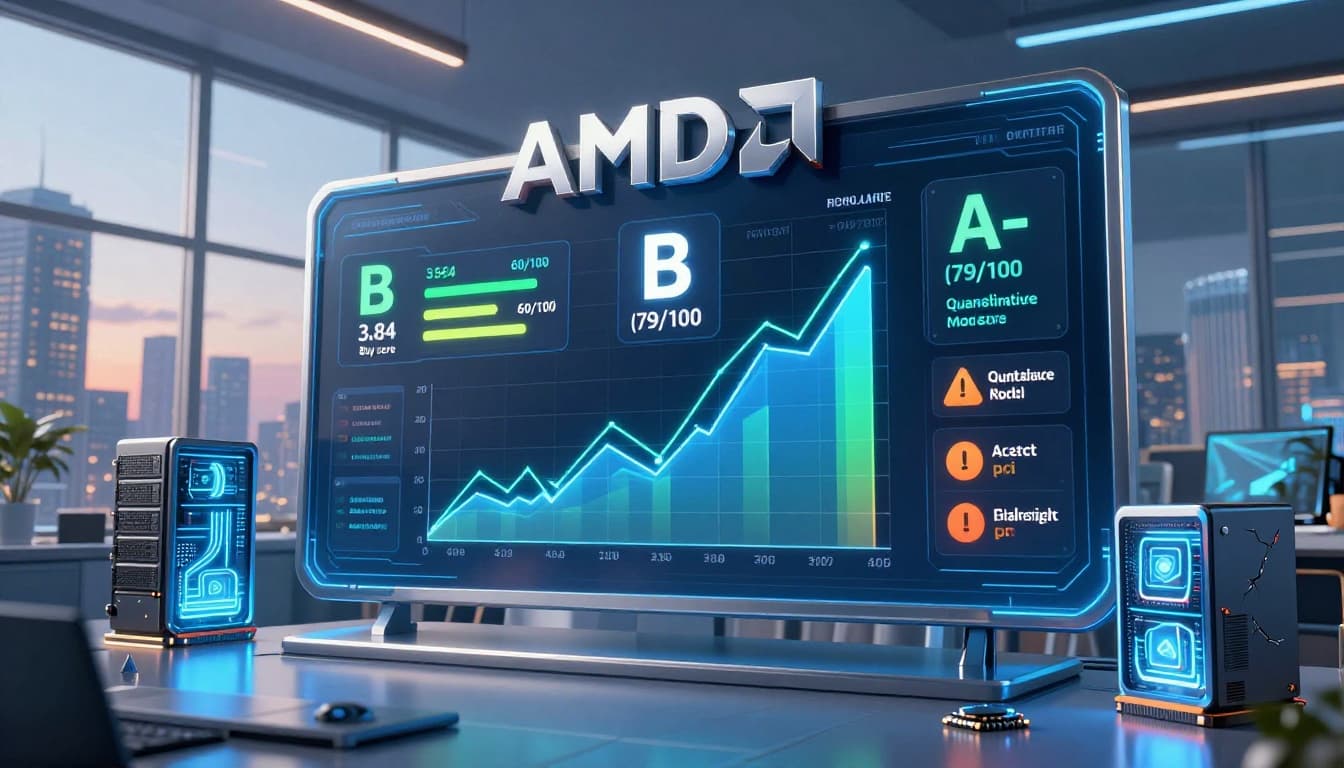
The provided rating snapshots lean positive, but they aren't uniform. One Wall Street style factor view gives AMD an overall "B" grade and a Buy score around 3.84 (on that system), with sentiment around 60/100, described as moderately bullish. That's optimism with caution.
A separate quantitative model in the same material shows an A- (79/100) overall score. In that view, growth scores extremely high, and financial health looks solid, while profitability and momentum look good but not perfect.
This combination makes sense. Investors see strong positioning in AI and data centers, yet they also see real cycle risk in PCs and gaming.
Keep ratings in their place. They can help organize the debate, but they don't protect you from a bad quarter, a macro shock, or a sudden rotation away from tech.
Key price levels and risk controls investors can use in a sideways market
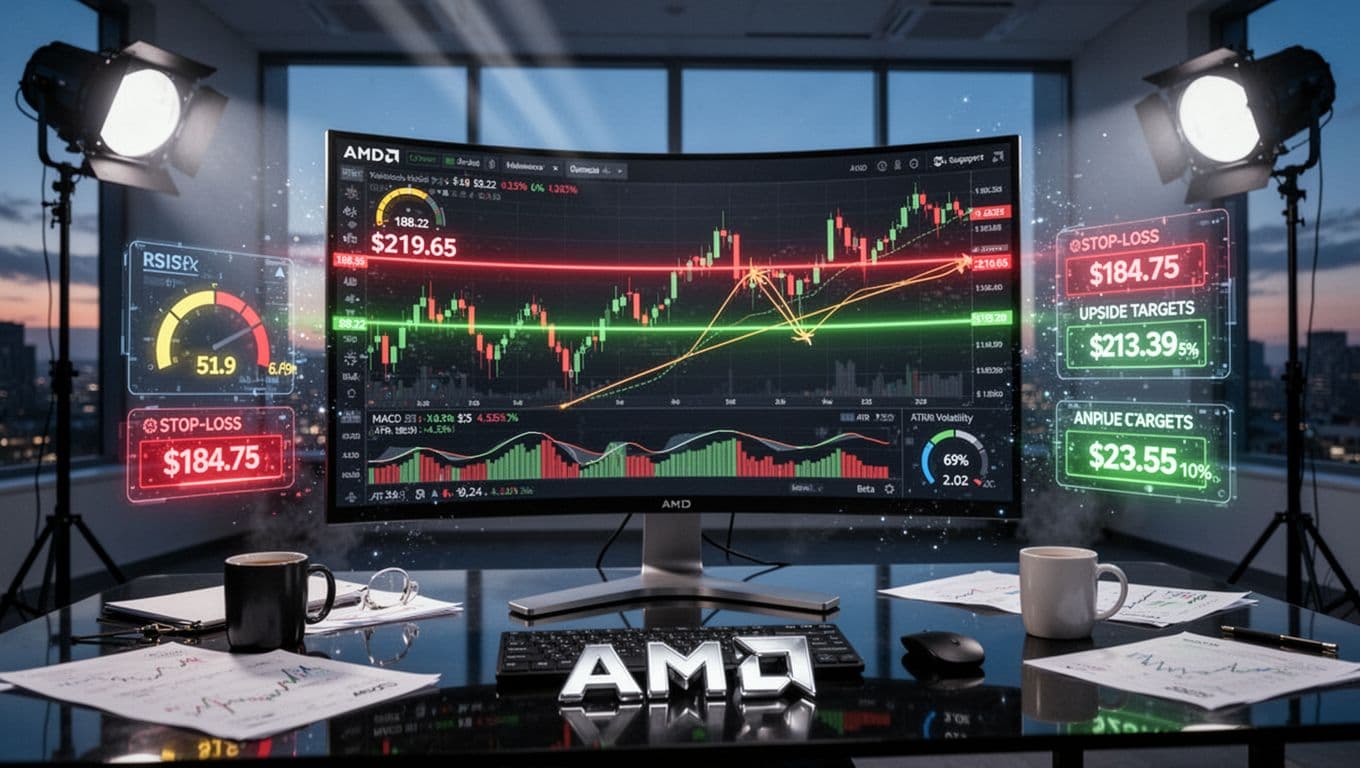
Technicals won't replace fundamentals, but they can help with timing and risk control, especially when a stock chops sideways.
The provided technical snapshot looks mixed:
- RSI near 51.9: neutral, not stretched
- MACD: bullish momentum signal in that snapshot
- Trend: sideways
- Support: about $188.22
- Resistance: about $219.65
- Overall signal: Hold, due to mixed indicators
Volatility stats underline why planning matters:
- ATR about $9.24 (around 4.55%)
- Annual volatility around 69%
- Beta about 2.02
The same snapshot offers example levels that traders sometimes use as guardrails, not as advice: a stop around $184.75, and upside reference points around $213.39 (about 5%) and $223.55 (about 10%).
In plain terms, AMD often trades like a rubber band. It can stretch quickly, then snap back just as fast. So position sizing and patience matter more than trying to "win" every week.
If you can't sleep with a 10% swing, you're holding too much AMD.
Does AMD look expensive, the P/E story and what forward expectations imply

At first glance, AMD's trailing P/E near 77.87 looks expensive. That ratio compares today's price to past earnings, and it can spike when a company is in a growth transition or when earnings are temporarily depressed versus what investors expect next.
On the other hand, the forward P/E near 18.67 tells a different story. Forward P/E uses expected earnings, so it bakes in growth. That can make the stock look more reasonable, but it comes with a catch: if the "E" (earnings) doesn't show up, that forward multiple can jump overnight.
Two more details from the snapshot round out the valuation picture:
- AMD pays no dividend, so investors rely on price gains.
- A profit margin around 12.5% shows the business can produce real profit, even if margins can move with product mix and pricing.
If you're a long-term investor, you're really betting on AMD's ability to expand earnings power as AI and data center demand compounds. If you're a conservative investor, the lack of a dividend and the stock's swingy nature may make it a watchlist name rather than a core holding.
Conclusion: A practical way to watch AMD in 2026

AMD sits in the middle of the AI and data center buildout, and it still has meaningful exposure to PCs and gaming. The March 2026 snapshot shows a stock around $203 with a market cap near $330B, plus a risk profile that's clearly high-volatility.
Here's the clean takeaway:
- Business strength: AMD is a major semiconductor player tied to AI, servers, PCs, and gaming.
- Recent performance: Q4 2025 results (as provided) look strong, with solid growth and cash flow.
- Near-term caution: Q1 2026 guidance is softer, and semi-custom gaming chips could decline in 2026.
- Market posture: signals lean Hold while price churns between support near $188 and resistance near $220.
If AMD is on your watchlist, focus on four checkpoints: the next earnings and guidance tone, data center and AI accelerator progress, margin direction, and whether the gaming decline starts to stabilize. For a long-term growth investor with a strong stomach, AMD can fit as a volatile compounder candidate. For a conservative investor, it often makes more sense to wait for clearer trends and smaller daily swings before sizing up.
When you subscribe to the blog, we will send you an e-mail when there are new updates on the site so you wouldn't miss them.