(CDE) Coeur Mining
A Long Running Gold and Silver Producer
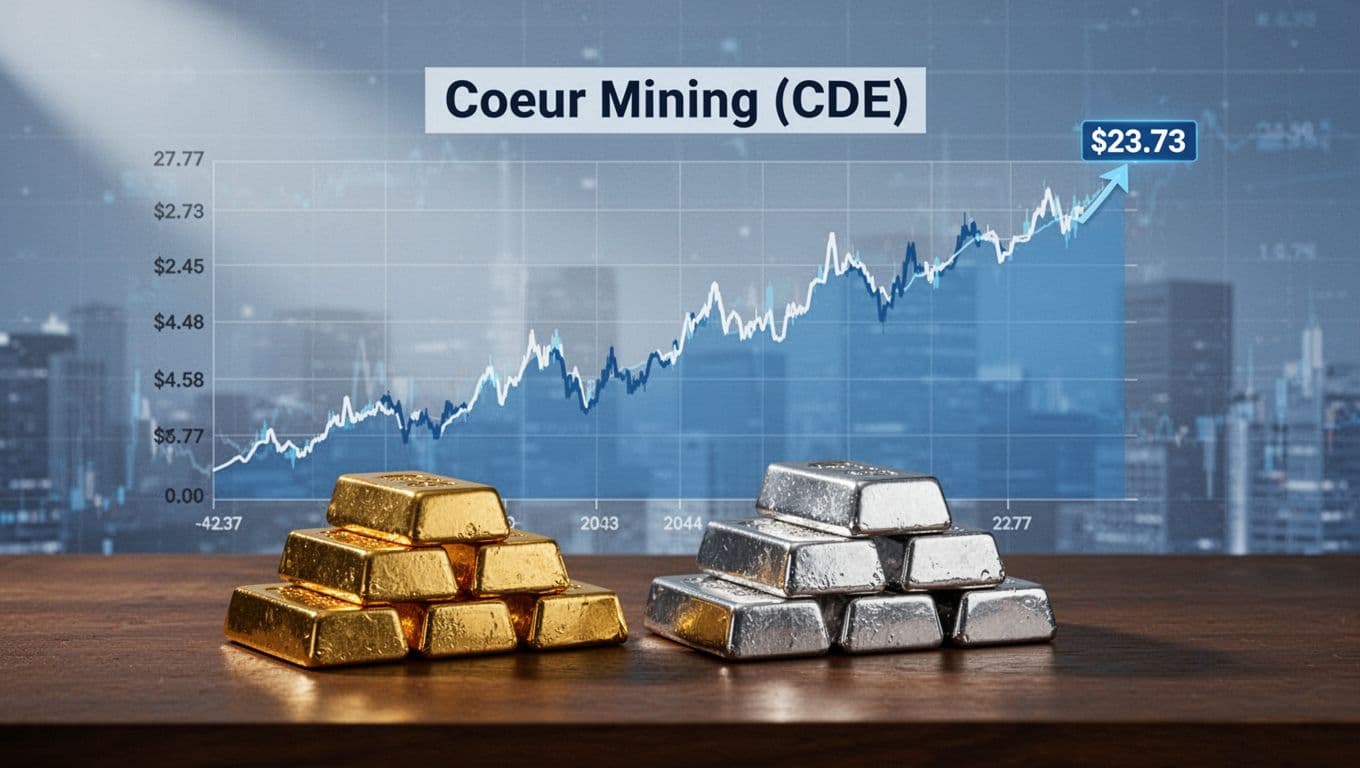 An at a glance view of CDE's recent run alongside the metals it produces.
Coeur Mining (CDE) is a long-running gold and silver producer with mines across the US, Canada, and Mexico. If you've watched the stock lately, you've seen the speed of the move: it ran from a 52-week low near $4.58 to a high near $27.77, and it trades around $23.73 as of Feb 19, 2026.
This post breaks down the key takeaways from the Patriot Roundtable Analysis, explains how Coeur makes money, and lays out the biggest risks to keep in mind, including dilution and big swings in gold and silver prices.
A quick look at Coeur Mining's business, mines, and where the money comes from
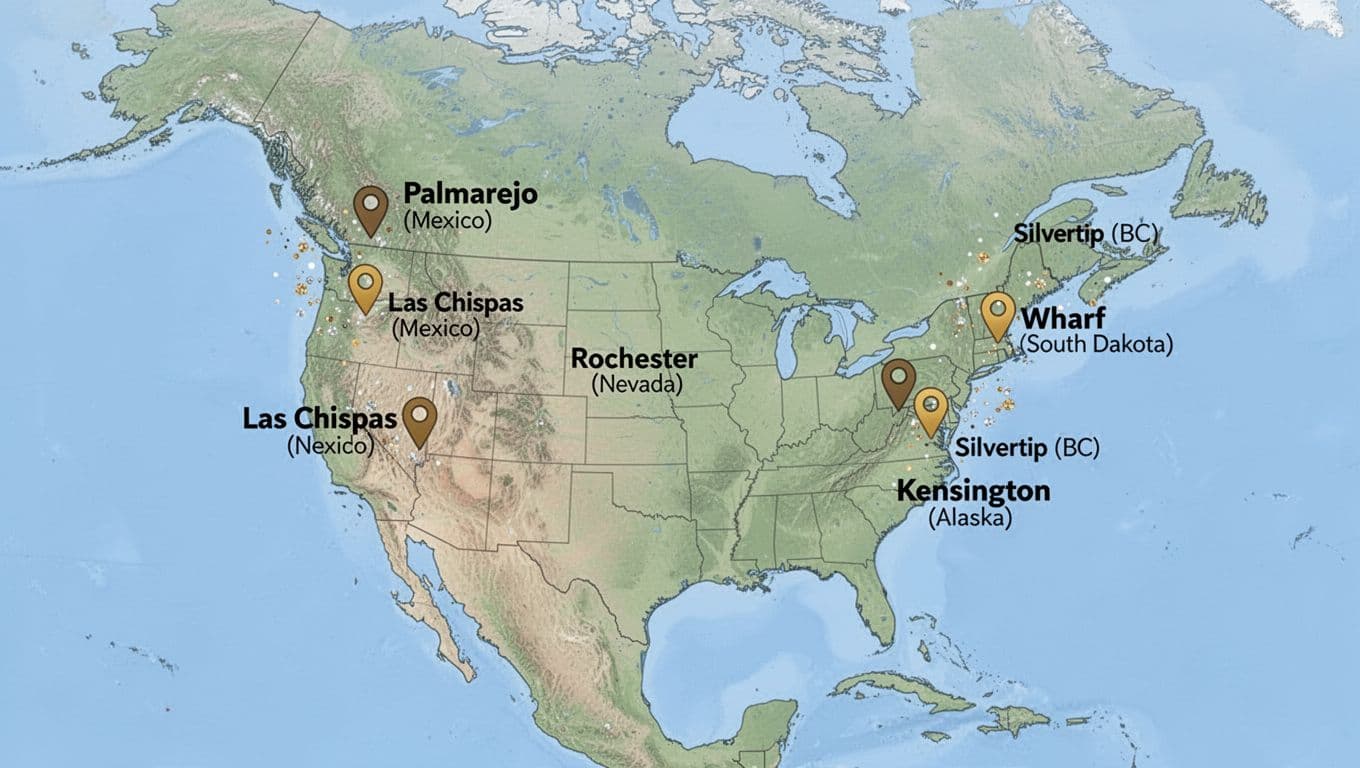 Coeur's operating footprint across North America.
Coeur Mining produces gold and silver, and it also explores for related metals like zinc and lead. In plain terms, the business is about finding ore, mining it safely, processing it efficiently, then selling the output into global metals markets.
Its key assets (including operating mines and at least one exploration project) are commonly described as:
- Palmarejo (Mexico), a gold and silver complex
- Rochester (Nevada), an open-pit heap leach silver and gold mine
- Wharf (South Dakota), an open-pit heap leach gold mine
- Kensington (Alaska), an underground gold mine
- Las Chispas (Mexico), an underground silver and gold mine
- Silvertip (British Columbia), an exploration-stage silver, zinc, and lead project
Revenue usually starts with metal sales. Coeur can sell metals and concentrates to third parties such as refiners and smelters, often under off-take style agreements. These arrangements can make sales more predictable, but the economics still tie back to metal prices, processing terms, and how cleanly the operation runs.
Location matters more than many new investors expect. "Mining-friendly jurisdictions" often means clearer permit paths, more stable rules, and better infrastructure. Those factors can affect costs and timelines, which then show up in quarterly results.
Meet the portfolio: why having several mines can lower risk, but adds complexity
Owning several mines can work like having more than one engine on a plane. If one engine has an issue, you still have a way forward. A single mine can face surprise problems, like a mechanical failure, a bad section of ore, or a permit delay. A multi-mine producer has a better shot at keeping company-wide production steady.
On the other hand, more mines also means more things to manage. Each site has different geology, equipment, labor needs, and weather risks. For example, Alaska operations can deal with harsh winter conditions and logistics challenges. Meanwhile, heap leach mines in the lower 48 states may face different constraints, like water rules, reagent costs, and pad performance.
In short, diversification can soften the blow of a single site problem, but only if the company keeps tight control on costs, safety, and planning across the full portfolio.
What changes when Coeur expands through deals, like the New Gold merger talk
Growth through acquisition can change a mining company quickly. Add the right asset and you may improve margins, extend mine life, or raise production. Add the wrong one and you inherit problems.
There has been market talk that a New Gold transaction involving Coeur was nearing final approval in early February 2026. Still, widely circulated updates have been limited, so investors should treat the topic carefully until terms and timelines are clearly confirmed.
Even when a deal looks good on paper, execution can get messy. Integrating teams and systems across many sites takes time. Mining is physical work, so "integration" is not just a finance slide deck. It can mean aligning safety standards, maintenance schedules, technical software, and even how different teams solve problems underground or at a processing plant.
The Patriot Roundtable notes point to this same issue: merging different cultures and technical operations across multiple North American sites can create real operational risk.
Patriot Roundtable Analysis highlights: growth, profitability, and the momentum story
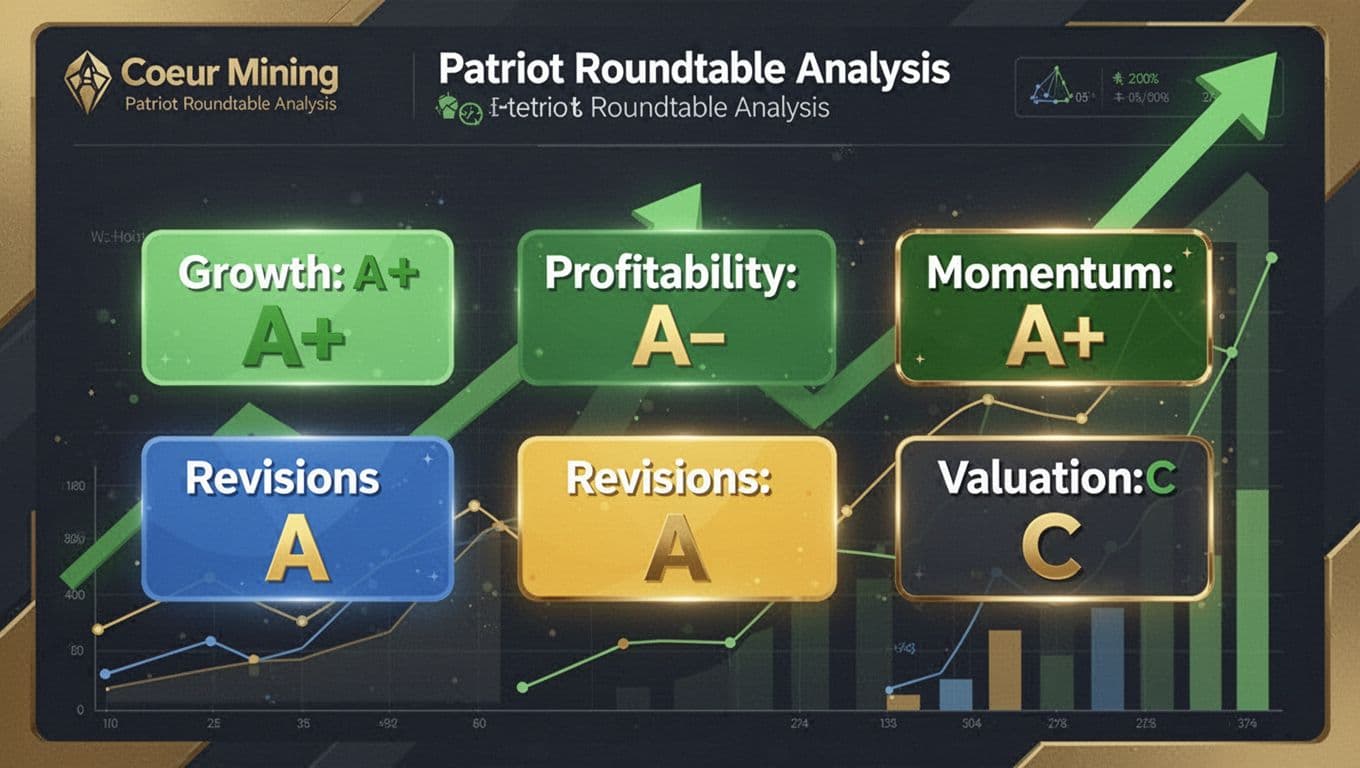 The five-factor grading idea shown as a simple scorecard.
The Patriot Roundtable Analysis view on CDE is straightforward: it tags the stock as Strong Buy, driven by strong growth, strong profitability, and powerful price momentum. The same framework also flags valuation as the weak spot, because some multiples look stretched compared with sector norms.
A key detail is that different data sources can show different versions of "forward P/E" and profitability, depending on estimates, time periods, and adjustments. The takeaway is not one perfect number, it's the overall shape of the story: fast improvement, solid margins (as presented in that analysis), and strong sentiment, with valuation risk attached.
Snapshot of the Patriot Roundtable Analysis rating and the key numbers behind it
Here's a single view of the main grades and metrics cited in the Patriot Roundtable materials, with a small amount of real-time context where helpful.
| Item | What was reported | Quick context |
|---|---|---|
| Overall rating | Strong Buy | Driven by growth, profitability, momentum, and estimate revisions |
| Market cap | $14.51B | Real-time screens vary, around $15.24B as of Feb 2026 |
| Industry | Gold | Precious metals producer (gold and silver exposure) |
| Forward EPS growth | ~124.25% | Shows a big step-up expected vs the prior period |
| Forward P/E | ~10.62 (also shown near ~21 in the same analysis set) | Forward P/E varies by estimate set, so treat it as "around the low teens to low 20s" depending on source |
| Revenue growth YoY | ~68% | Real-time context: 2025 revenue about $2.07B, up sharply year over year |
| Net income margin | ~24% vs sector ~5% | Margin definitions differ by data vendor and period, but the analysis frames CDE as well above peers |
| 1-year price performance | ~231% vs sector ~34% | Highlights very strong momentum compared with the sector |
| EPS revisions (last 3 months) | 5 up, 0 down | Suggests analysts have gotten more optimistic recently |
| Factor grades | Valuation C, Growth A+, Profitability A-, Momentum A+, Revisions A | Mixed valuation, strong fundamentals and sentiment in this framework |
The reason this framework lands on Strong Buy is simple: growth plus profitability plus momentum, with analysts raising numbers, can overpower a "not cheap" valuation, at least until the cycle turns.
If you buy miners, you're not just buying metal prices. You're also buying cost control, execution, and sometimes a lot of investor emotion.
Table: Valuation check, what looks expensive, and what looks reasonable
This table focuses only on the valuation comparisons cited in the Patriot Roundtable notes.
| Valuation signal | CDE (reported) | Sector median (reported) | What it can mean |
|---|---|---|---|
| Price-to-sales (P/S) | ~7.41 | ~1.74 | Looks expensive versus peers on revenue multiple |
| Forward P/E (one view) | ~21 | ~22 | Roughly in line with peers on earnings multiple |
| Momentum effect | High | Varies | Fast price runs can make multiples look stretched quickly |
A miner can look pricey right before it posts great quarters, or right before metal prices roll over. Because of that, valuation works best when you pair it with cycle and execution.
- Cycle timing matters: gold and silver can lift earnings fast, then give it back.
- Costs matter as much as ounces: watch energy, labor, and processing performance.
- Mine life matters: reserves and resources help explain whether profits are durable.
The bull case vs. the bear case for CDE in 2026 (in plain English)
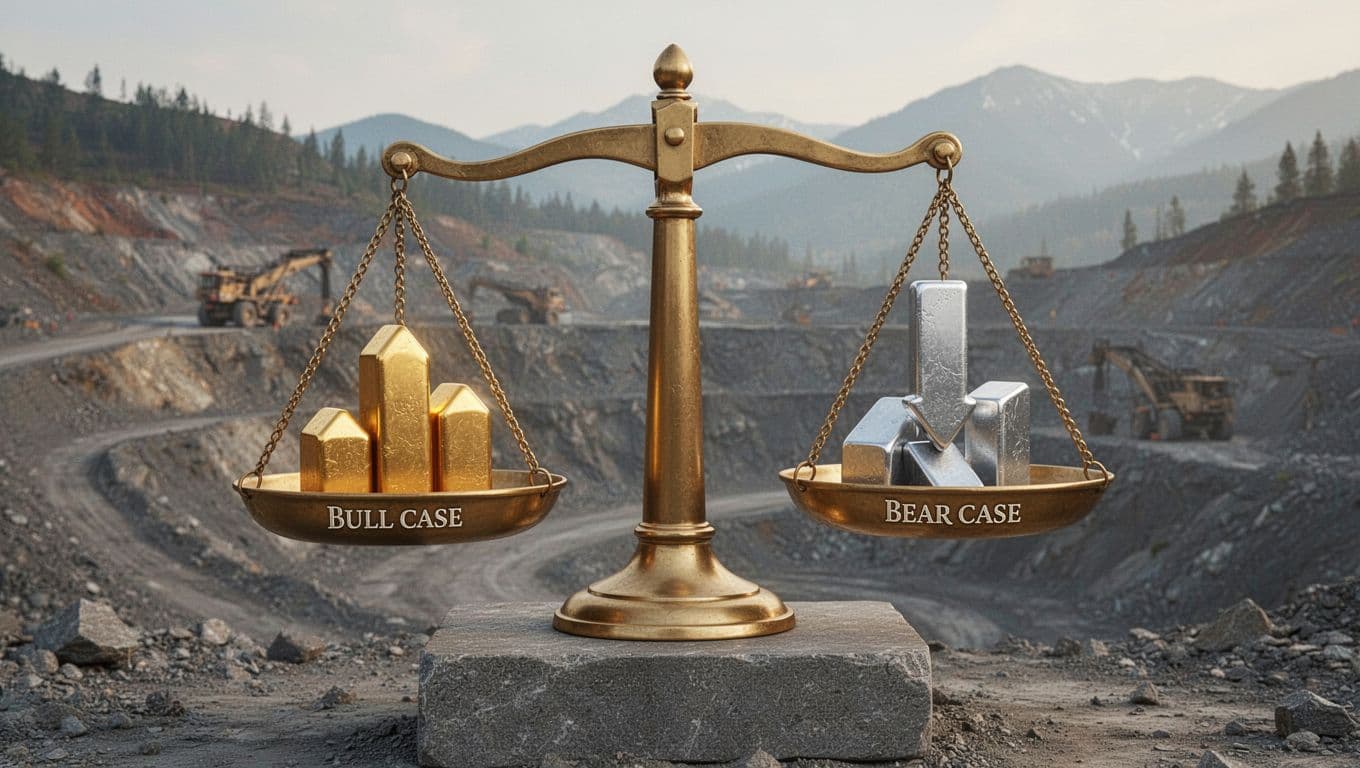 A simple way to picture the trade-offs.
Coeur's story in 2026 has two clear sides. The bull case says earnings power is improving because the company expanded its asset base, added higher-margin production, and rode stronger metals pricing. The bear case says a fast run can set up a painful pullback, especially if share count rises or metals fall.
On the optimistic side, the Patriot Roundtable notes point to rapid revenue growth (around 68% year over year) and strong profitability metrics versus sector averages. Real-time context also shows 2025 revenue around $2.07 billion, which helps explain why growth grades came in hot. Add in positive estimate revisions (five upward, none downward in three months), and you get a picture of analysts chasing the numbers higher.
There's also a forward-looking claim in the same materials: Coeur is positioned to target meaningful free cash flow by 2026, which could open the door to dividends or buybacks. That's a projection, not a guarantee, but it frames what bulls want to see next.
On the cautious side, the documents flag share dilution as a real concern. When a company issues more shares, the business has to grow faster just to keep per-share results moving up. The notes also warn about recession sensitivity and sharp downside risk if gold and silver prices drop.
What could go right: cash flow growth, stronger mines, and upside if metals stay firm
Several drivers can push a miner higher, even after a big run. For Coeur, the "what could go right" list looks pretty practical.
First, higher production can lift revenue fast, as long as recoveries hold up. Next, lower costs per ounce can help even if metal prices go sideways. Cost wins often come from better throughput, fewer downtime events, and smarter mine planning.
Another driver is reserve and resource updates. When a company extends mine life or improves grade expectations, the market can re-rate the stock. In addition, steady gold and silver prices can support cash flow, which supports debt reduction, capex discipline, and eventually shareholder returns.
Finally, there's execution on new assets. The Patriot Roundtable view highlights that high-margin additions, including Las Chispas, improved the company's financial picture in that framework. If integration goes smoothly and performance holds, that supports the growth narrative.
One more point that matters for income investors: real-time data shows no dividend today (yield at 0.00%). So for now, returns usually come from price movement, and only later, possibly from buybacks or dividends if free cash flow allows.
What could go wrong: dilution, deal execution, and metal price whiplash
The risks are not hard to understand, but they can hit fast.
Start with dilution. Here's a simple example: if a company has 100 shares and earns $100, that's $1 per share. If it issues 25 new shares and earnings stay at $100, earnings fall to $0.80 per share. The business did not get worse, but each share owns less of it.
Next is deal and integration risk. Mining companies don't sell apps, they run heavy equipment and manage ore bodies that can surprise you. When teams merge, small gaps can cause big costs, like delayed maintenance, mismatched safety habits, or different technical approaches to geology and metallurgy. The Patriot Roundtable notes call out this challenge directly when discussing integration across multiple North American locations.
Then there's commodity risk, which is the big one. Gold and silver prices can swing on inflation expectations, rates, and risk sentiment. Miners often move more than the metals because they have operating costs and fixed commitments. If gold drops, margins can shrink quickly, and the stock can fall harder than investors expect.
The documents also describe CDE as potentially fully valued with elevated recession sensitivity, which sets up the possibility of a sharp correction if the tape turns against metals.
Conclusion: A calm way to think about Coeur Mining (CDE) right now
Coeur Mining's recent results and stock move explain why the Patriot Roundtable Analysis leans bullish: strong growth signals, better profitability versus peers in that framework, powerful momentum, and upward estimate revisions. At the same time, the risks are real, especially valuation after a big run, share dilution, the difficulty of integrating assets, and plain old gold and silver price swings.
If you're considering CDE, keep it simple and keep score with a short checklist:
- Track all-in costs and guidance each quarter
- Watch the share count for dilution trends
- Follow reserve and resource updates for mine-life signals
- Monitor gold and silver prices, since CDE can swing more than the metals
- Read updates on deals and integration milestones (if any move forward)
In the end, CDE is a stock where execution and metal prices can both matter on the same day. A clear plan and a short list of numbers to watch can help you stay steady.
When you subscribe to the blog, we will send you an e-mail when there are new updates on the site so you wouldn't miss them.