(CIEN) Ciena Technology
Moving Huge Amounts Of Data Across Optic Networks

If AI is the engine, fiber networks are the highways, and Ciena helps build the lanes. The company sells systems that move huge amounts of data across optical networks, which matters more now as cloud use, AI training, and data center traffic keep climbing.
That story has pulled investors back in. In early April 2026, CIEN showed strong momentum, bullish sentiment, and a sharp price run that put the stock back on more screens.
Here's the key issue: great network businesses can still be tricky stocks. Ciena's business looks timely, but valuation and volatility still matter.
What Ciena does and why its technology matters now

Ciena sits in the middle of a simple but important problem. The internet keeps carrying more traffic, and networks need to move that traffic faster without wasting power or space. That's where Ciena comes in.
Its products help telecom carriers, cloud firms, and large enterprises push more data over fiber. In plain English, Ciena sells the gear and software that let operators send more information through the same network, with better speed and lower delay. In the Communication Equipment market, that makes it one of the more direct ways to invest in rising bandwidth demand.
How Ciena supports the networks behind cloud, AI, and internet traffic

Streaming, cloud apps, and video calls all add load to networks. AI adds even more. Large models need fast links between data centers, because computing often happens across many sites at once.
That makes data center interconnect a bigger deal than it used to be. When hyperscalers expand AI clusters, they also need stronger optical links. Ciena benefits when customers upgrade from older transport systems to higher-capacity optical platforms.
Ciena sells the picks and shovels for AI traffic, not the AI models themselves.
Where Ciena fits in the Communication Equipment market
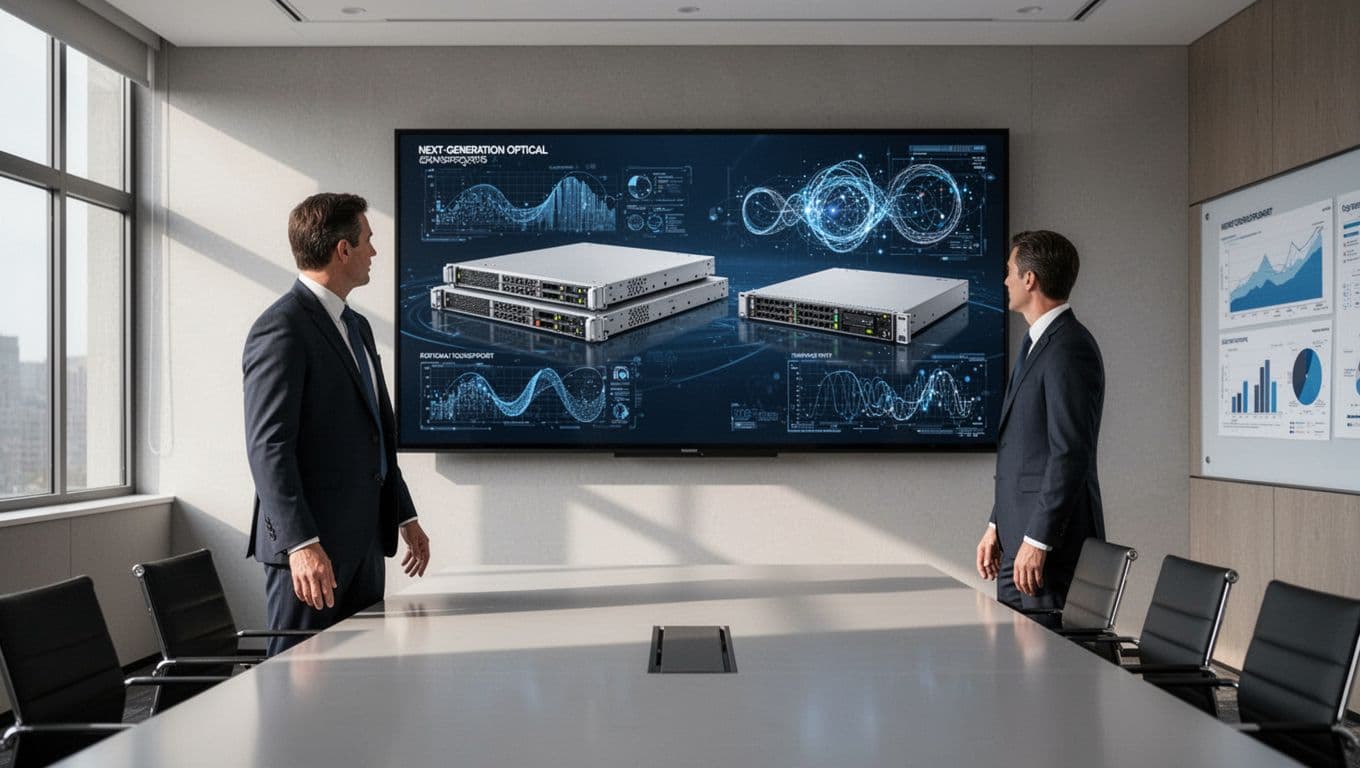
Ciena has a strong name in high-speed optical transport. In North America and Europe, it's often viewed as one of the top suppliers in this niche. Some industry watchers now describe the market as led by Ciena and a stronger Nokia-Infinera combination, with Cisco also pressing into related areas.
That doesn't mean Ciena owns the whole market. It does mean the company has a solid place in one of the more attractive corners of network infrastructure. For investors, that position matters because buyers don't switch core transport vendors lightly.
The Ciena technology story, from WaveLogic to AI-ready networking

Ciena's edge is not only demand. It's also product depth. The company has spent years building optical engines, transport platforms, and software that work together. That can support pricing, protect customer ties, and help margins over time.
For investors, this is the real technology case. If Ciena keeps leading in speed, power use, and automation, it can keep winning bigger network upgrades.
Why WaveLogic 6 is a big deal for speed, power use, and scale

WaveLogic 6 is the headline. The family includes WaveLogic 6 Extreme and WaveLogic 6 Nano, both aimed at moving more data with better efficiency. The standout number is 1.6 terabits per second, which speaks directly to AI and cloud traffic growth.
Why does that matter? Because customers don't only want more speed. They want more speed per watt, and more capacity in the same rack space. AI data centers burn through power fast, so better energy use per bit matters almost as much as raw throughput.
Ciena's early push into this level of optical performance helps its leadership case. If it keeps that lead, the company has a better shot at premium contracts.
How Blue Planet and AIOps make the network smarter

Ciena is not only a hardware story. Blue Planet adds software, orchestration, and automation tools that help operators manage large networks with fewer manual steps.
That matters because network operators want less downtime and faster fault repair. AI-driven operations tools can spot trouble sooner, suggest fixes, and automate parts of the response. In simple terms, the network becomes easier to run.
Software also tends to bring better economics than boxes alone. If Blue Planet and AIOps gain traction, Ciena could improve customer stickiness while building a healthier mix of revenue.
What newer products could mean for future growth

WaveLogic gets most of the attention, but it's not the whole story. Products like Waveserver, the E-Series, WaveRouter, and access platforms widen Ciena's reach. That broadens the company from long-haul transport into metro, edge, and dense data center links.
There's also the Nubis angle tied to co-packaged optics. That part is still a forward-looking piece of the story, but the idea is clear. Future AI systems may need denser, shorter, and lower-power links inside facilities, not only between them.
That wider product set matters to investors because it can expand Ciena's addressable market. A company that sells into more parts of the network has more ways to grow.
What the numbers say about CIEN stock in April 2026
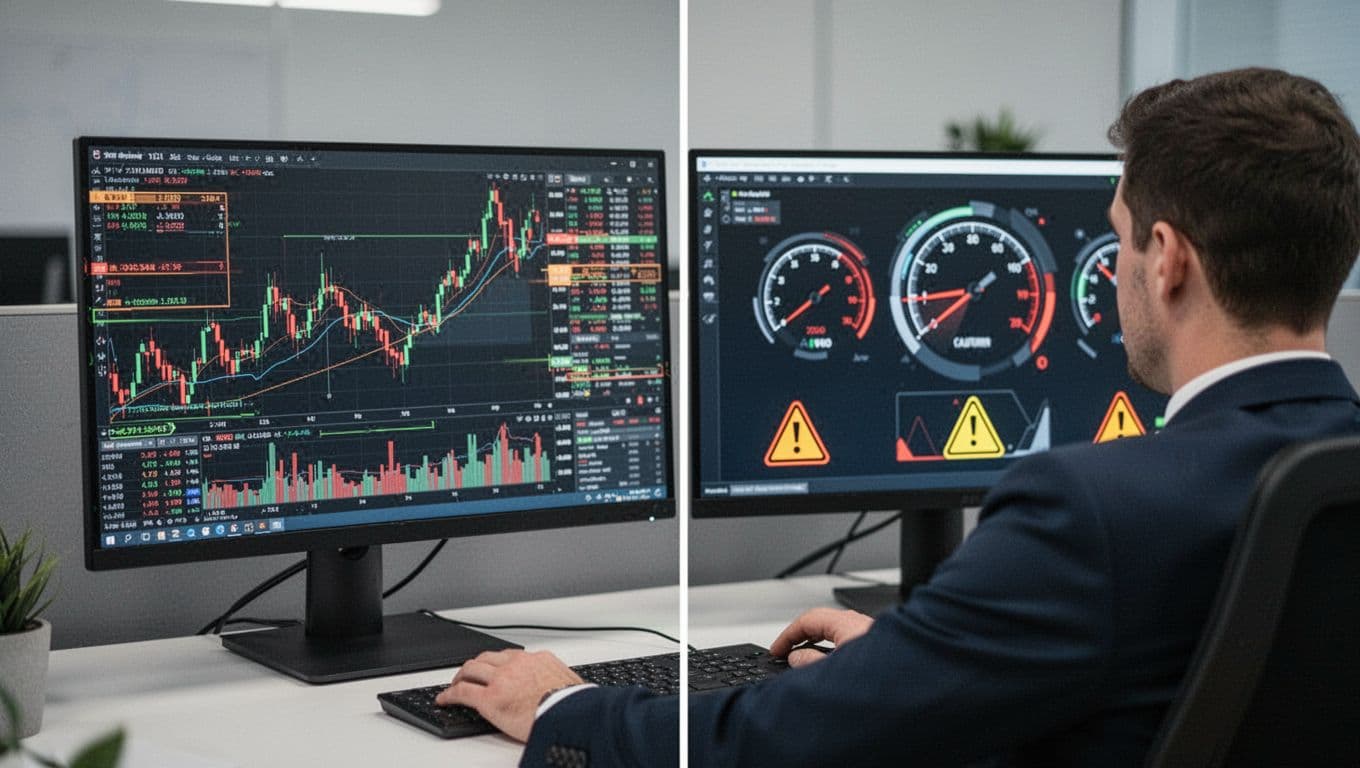
The stock story is strong, but it isn't simple. CIEN has been one of the hotter names in network infrastructure, with powerful recent gains and favorable trading signals. At the same time, the shares look expensive and can move hard in both directions.
This quick snapshot puts the current picture in one place:
| Metric | Early April 2026 read |
|---|---|
| Share price | About $442 |
| Market cap | About $62.6 billion |
| 1-day move | About +6.5% |
| 1-month move | About +28.7% |
| 3-month move | About +89.1% |
| RSI | 65.7, near the upper end of neutral |
| Trend | Price above rising 20-day and 50-day averages |
| P/E ratio | About 280 |
| Risk profile | High volatility, beta near 1.09 |
The takeaway is clear. Momentum looks strong, but the stock is priced for growth.
Bullish signals that are getting investors' attention

The recent run has been hard to miss. One data set showed gains of roughly 6.5 percent in a day, 14 percent in a week, nearly 29 percent in a month, and about 89 percent in three months. That kind of move usually brings momentum traders and growth investors into the same room.
Other signals lean positive too. MACD turned bullish, the stock stayed above rising short-term moving averages, and sentiment readings landed in bullish territory. Some quant-style models also ranked Ciena well, with standout marks for growth and momentum.
Still, price action is a temperature check, not a promise. Strong charts can keep running, but they can also cool off fast.
The valuation and risk factors investors should not ignore

Ciena does not look like a cheap stock now. A P/E near 280 tells you investors expect a lot of future growth. That can work, but it leaves less room for mistakes.
The company also isn't an income play. There's no dividend, and recent net margin has been modest, even though adjusted operating performance has improved. One set of figures showed adjusted operating margin near 17.9 percent, while net margin stayed far lower.
Then there's the trading risk. Annualized volatility has been high, ATR has been wide, and the RSI sits close to overbought territory. In other words, this is the type of stock that can sprint higher and then drop sharply on a shift in sentiment.
How backlog and financial health shape the investment case

One of the better supports for the bull case is backlog. Recent data pointed to roughly $7 billion in orders, which can help revenue visibility into 2027 if shipments and execution stay on track.
That matters in hardware and infrastructure because orders often arrive before revenue. A large backlog gives investors more confidence that demand is real, not only hoped for.
Balance sheet quality also helps. Debt looks manageable, with debt to equity around 0.6, and liquidity appears solid, with a current ratio near 2.7. Some rating models also gave Ciena healthy marks for financial strength. That doesn't erase risk, but it does make the story sturdier.
What could drive CIEN higher, and what could slow it down

The upside case starts with AI infrastructure. Hyperscalers need faster links between compute clusters, storage, and data centers. As networks move from 800G toward 1.6T, Ciena has a clear lane to sell higher-performance systems.
Growth drivers that could support the next leg up

AI spending is the main driver, but it's not the only one. Cloud demand remains strong, and some public broadband funding could support more rural and regional fiber builds. If those projects keep moving, optical and access gear demand should benefit.
Ciena also has momentum in its favor. Some models scored growth near the top of the scale, and one rating system gave it an overall score in the low 80s with strong marks for financial health. Broader index attention, including its addition to FTSE All-World, can also help investor awareness.
Over the next 12 to 24 months, watch three things: hyperscaler orders, 1.6T product adoption, and backlog conversion into revenue.
The biggest risks to watch before buying CIEN

Hardware demand can be cyclical, even in a good theme. Customers may delay orders, stretch budgets, or wait for the next product cycle. Supply constraints can also slow shipments and turn strong demand into messy quarter-to-quarter numbers.
Competition is another issue. Nokia-Infinera, Cisco, and other vendors won't leave attractive optical deals uncontested. If pricing gets tighter, margin pressure can follow.
Most of all, expectations already look high. When a stock has surged and the valuation is rich, even good results may not be enough. That's why CIEN looks better suited to investors who can handle pullbacks without panicking.
Ciena stands out because it sits where AI demand meets fiber infrastructure. Its optical technology, software layer, and backlog give the company a strong growth story, while recent stock action shows that investors are paying attention.
Still, CIEN is not a quiet stock. It may fit growth-focused investors who can live with swings, but it's a tougher match for conservative income seekers.
If you're tracking the name, keep your eye on hyperscaler demand, WaveLogic 6 adoption, backlog conversion, and margin trends. Those four points should tell you whether the story is getting stronger, or just more expensive.
When you subscribe to the blog, we will send you an e-mail when there are new updates on the site so you wouldn't miss them.