(KLAC) KLA Corporation
Quietly Shaping The AI Boom
Hello Fellow Patriots,
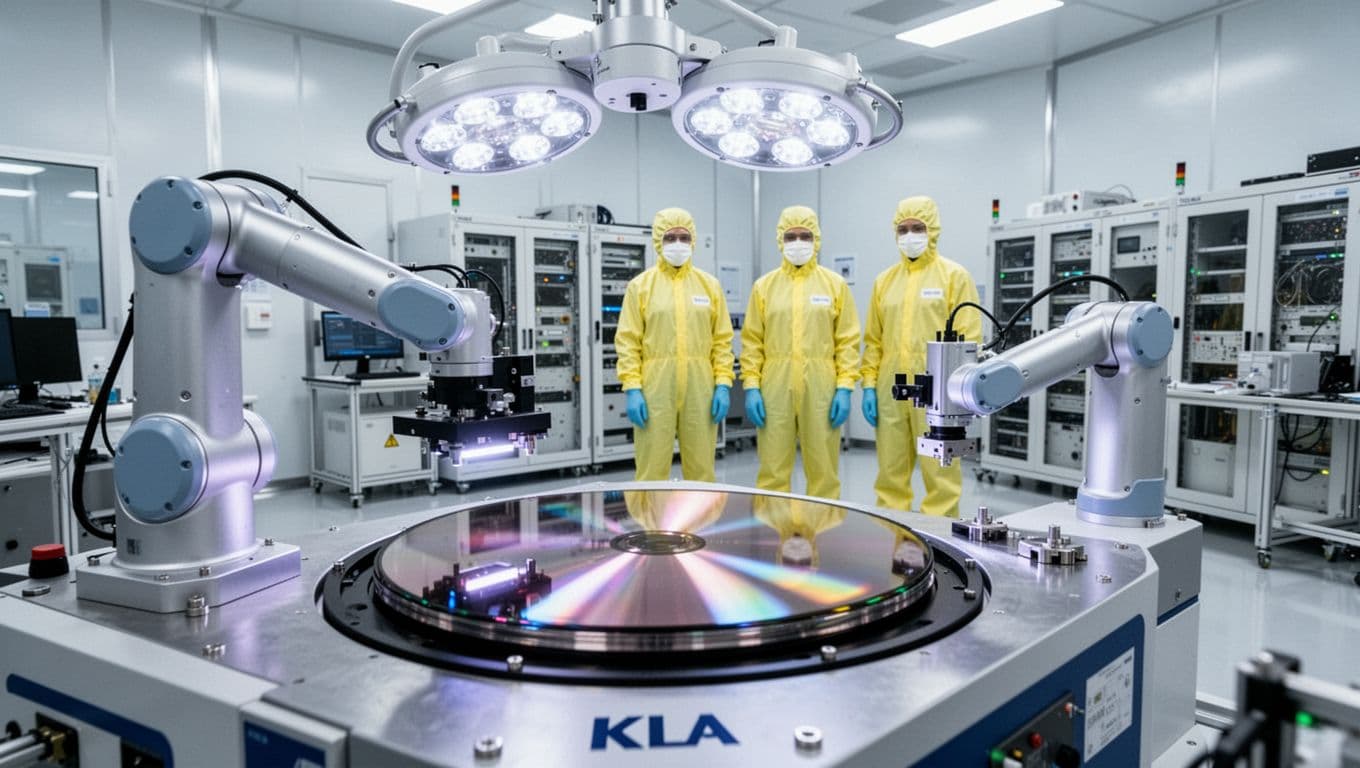
When I think about the companies that quietly shape the chip boom, KLA Corporation (KLAC) sits near the top of my list. KLA sells inspection and process control tools, the systems chipmakers use to spot tiny defects and keep production on track. That sounds dull until you remember what's happening in 2026: AI chips are expensive to build, and advanced packaging is adding new steps where mistakes can multiply.
As of mid-February 2026, KLAC trades around the mid-$1,400s, and its market cap is roughly $192 billion (it moves with the tape, but that's the neighborhood). Investors keep circling the stock because the AI buildout keeps pulling semiconductor spending forward, and because KLA's profit profile looks unusually strong for a cyclical industry.
On Wall Street, the tone is generally Buy to Moderate Buy. Recent price targets I've seen cluster in a wide band, roughly from the high $1,300s up to about $1,900. In other words, there's optimism, but it isn't blind optimism.
What KLA does, and why it is so important to modern chips
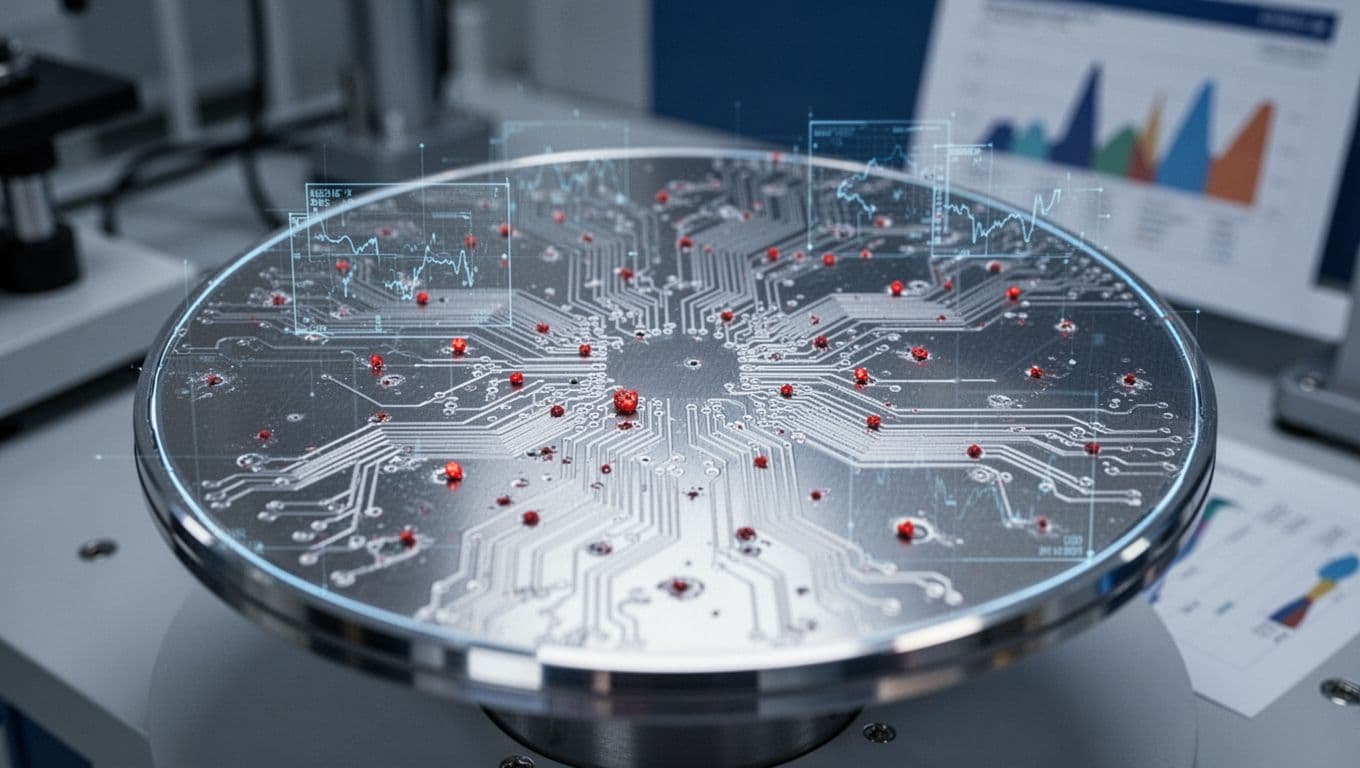
KLA lives in the unglamorous but essential part of the semiconductor supply chain: it helps factories measure, inspect, and control how chips are made. If you picture a chip fab as a giant kitchen, KLA doesn't sell the stove. It sells the thermometers, timers, and quality checks that stop a batch from getting ruined.
That role matters more every year because chips keep getting harder to manufacture. Shrinking features, more layers, and tighter tolerances mean a small error can wipe out yields. As a result, chipmakers often spend more on process control tools as complexity rises. The logic is simple: when wafers cost a fortune, catching problems early can save a fortune.
Another reason I care about KLA in 2026 is that its tools sit close to the "money moments" in manufacturing. If a foundry can raise yield by even a small amount, the economics can change fast. For advanced nodes and high-value AI accelerators, the value of a clean wafer run can be huge. That's why inspection and metrology aren't optional extras, they're part of the cost of doing business.
AI infrastructure also changes the demand picture. Training and inference clusters need more leading-edge compute, more memory, and more high-bandwidth connections. Each of those pushes manufacturing difficulty up a notch. Meanwhile, advanced packaging adds new inspection points after the wafer is made. Problems can show up in bonding, interconnects, or alignment, not just on the silicon itself.
So while people debate which chip designer wins, I often ask a different question: who sells the tools that help everyone ship better chips?
The simple explanation, KLA helps chipmakers catch problems early
I explain KLA to friends with an everyday analogy: it's like quality control in a factory that makes high-end watches. The parts are tiny, the tolerances are strict, and one flaw can kill the final product. KLA's inspection systems look for defects, its metrology tools measure patterns and dimensions, and its process control software helps keep production stable.
That "catch it early" mindset is the whole point. When a defect shows up late, you waste more steps and more money. When it shows up early, you can fix the process before the line produces another pile of scrap. On modern wafers, small improvements in yield can mean very large dollars, especially when leading-edge tools and materials cost so much.
Why AI and advanced packaging can boost demand for KLA tools
AI chips are not only fast, they're complex to build and package. That tends to increase the number of measurements and inspections needed to keep yield high. Advanced packaging, in particular, adds steps where tiny misalignments or bonding issues can reduce performance or reliability.
In 2026 planning conversations, one common expectation I hear is mid-to-high teens growth in advanced packaging related revenue. I treat that as a reasonable directional signal, not a promise. Still, the takeaway is straightforward: if packaging becomes a bigger slice of chip value, it also becomes a bigger slice of inspection and control spending.
How I size up KLAC as a stock, growth, profits, and financial strength
I like to anchor a stock with a few "can't ignore" numbers before I get fancy. For KLA, the recent fundamentals are hard to miss: the latest annual revenue figure I'm using is about $12.16 billion, and net profit is about $4.06 billion (fiscal year ended June 30, 2025). That's a rare profit profile, especially for a company exposed to semiconductor spending cycles.
On liquidity, the snapshot I'm working from shows a current ratio around 2.83 and a quick ratio around 1.87. In plain English, that suggests KLA has a comfortable buffer of near-term assets relative to near-term obligations. It doesn't eliminate risk, but it reduces the chance that a mild downturn turns into a balance sheet problem.
Valuation is where I slow down. With the stock in the mid-$1,400s and market cap near $192 billion, the implied price-to-sales is roughly around 15 (ballpark math using annual revenue). P/E has also been elevated, with recent readings in the low 40s. I don't call that "wrong," but I do call it "demanding." The market is paying for quality and for AI-related staying power.
KLA also isn't an income stock in my book. Dividend yield has been cited around 0.5%, which is basically a token. If I buy KLAC, I'm doing it for durable earnings and compounding, not for a paycheck.
Here's the quant snapshot from my notes, which helps me compare KLAC against other candidates quickly.
Patriot Roundtable Quantitative Analysis (KLAC)
| Category | Result |
|---|---|
| Overall rating | Strong Buy |
| Grade | A |
| Score | 81/100 |
| Valuation | 66 (B+) |
| Growth | 80 (A) |
| Profitability | 93 (A+) |
| Momentum | 90 (A+) |
| Financial Health | 71 (A-) |
These scores help me standardize my first pass across stocks. They don't tell me what the next quarter brings, and they don't protect me from a bad entry price.
What the numbers say about profitability and cash power
KLA's profitability is the headline for me. One reference point in my notes puts profit margin around 35.8%, and the fiscal year math I'm using lands in the low 30% range. Either way, that's strong.
High margins matter because chip tools can be cyclical. When industry spending slows, pricing pressure and lower volume can bite. A company with fat margins has more room to keep investing, support customers, and still generate healthy cash.
It also tells me something about KLA's position. Process control tends to be a "must have," not a "nice to have," when fabs chase yield. That doesn't make revenue recession-proof, but it can make demand steadier than people expect during upgrade cycles.
What I watch in valuation and shareholder returns
I keep two valuation ideas in my head at once. First, a high P/E can be justified if earnings keep rising and the business stays dominant. Second, high P/E stocks can punish you if growth pauses, even briefly.
So I watch expectation risk. When the market already assumes a lot, small disappointments can hit hard. KLAC also has a low dividend yield (about 0.5%), so most of my return depends on the stock price going up over time.
For me, that frames KLAC as a quality growth holding, not an income holding. If I want income, I look elsewhere. If I want a "picks-and-shovels" business tied to advanced chips, KLAC stays on my screen.
Momentum, risk, and a practical plan for entry and exit levels
On the price action side, I try to stay humble. Great businesses can trade sideways. Great stocks can drop 20% on perfectly normal news. That's why I treat technical signals as risk tools, not crystal balls.
The market snapshot I'm working with shows mixed signals. Sentiment reads moderately bullish, yet the trend has been sideways and momentum indicators aren't fully aligned. Here's the quick view.
Patriot Roundtable Market Analysis Snapshot
| Metric | Value |
|---|---|
| Market rating | 69/100 (B) |
| Sentiment | 60/100 (Moderately Bullish) |
| RSI (14) | 44.8 (Neutral) |
| MACD | Bearish |
| Trend | Sideways |
| Support | ~$1,285 |
| Resistance | ~$1,693 |
| Beta | ~1.46 |
| Annual volatility | ~49.3% |
| ATR | ~$83.82 (5.72%) |
| Suggested stop loss | ~$1,296 |
| Target 1 | ~$1,537 |
| Target 2 | ~$1,611 |
In one sentence, RSI is a momentum gauge that helps me see if a stock looks stretched up or down. In one sentence, MACD tracks trend momentum, and a bearish read hints that upward momentum is weak right now.
Here's what I personally do with a setup like this:
- Position size: I start smaller when beta and volatility are high.
- Stop loss: I decide my line in the sand before I buy.
- Time horizon: I label the trade or the investment, then I act like it.
My main rule: if I can't explain my exit plan in one breath, my position is too big.
Why I treat KLAC as higher risk even if the business looks strong
A beta around 1.46 tells me KLAC often swings more than the broad market. Annual volatility near 49% reinforces that message. Even if the long-term story is solid, the ride can feel rough.
There's also business cycle risk. KLA sells into semiconductor capex. When fabs slow spending, tool makers can feel it. AI demand can soften the cycle, but it can't erase the cycle.
So I try not to confuse "excellent company" with "safe stock." KLAC can be both excellent and swingy at the same time.
A simple playbook, what I would do as a long term investor vs a short term trader
If I'm thinking long term, I care most about earnings power and competitive position. In that case, I'm more open to dollar-cost averaging and letting time do the work. I still respect valuation, but I don't demand the perfect entry.
If I'm thinking short term, the current mix of signals pushes me to patience. With RSI neutral and MACD bearish, I prefer to wait for clearer direction. I also keep support and resistance in view (around $1,285 and $1,693). Then I define stops early because the ATR suggests KLAC can move a lot in a normal week.
None of this is financial advice. It's just how I keep myself from turning a good idea into a stressful one.
Conclusion: My bottom line on KLA (KLAC) right now
KLA is the kind of business I like owning when chips get harder to make. It sells the tools that help fabs protect yield, and that matters even more for AI chips and advanced packaging. Financially, the story looks strong, with about $12.16B in annual revenue and about $4.06B in net profit in the latest fiscal year, plus solid liquidity signals in the ratios I track.
Still, I don't ignore price. With P/E readings in the low 40s and a low dividend yield, KLAC is not "cheap," and it can swing. That's why I hold two ideas at once: the Strong Buy style quant view reflects strong fundamentals, while the more mixed technical picture argues for discipline on entry.
Next, I'll watch the next earnings print, guidance, advanced packaging demand signals, and how the stock behaves near $1,285 support and $1,693 resistance.
When you subscribe to the blog, we will send you an e-mail when there are new updates on the site so you wouldn't miss them.