(LITE) Lumentum Holdings Inc.
AI Optics Boom
 An AI data center where fast optical links keep clusters connected.
When people talk about AI infrastructure, they usually focus on GPUs. I think the more interesting bottleneck is the stuff that connects them. That's where Lumentum (LITE) shows up.
In plain terms, Lumentum sells optical and photonic hardware, the lasers, chips, and modules that move huge amounts of data through fiber. That matters because AI training and inference push data center networks harder than most apps ever did.
I'm using context from Patriot Market Research to frame this story, since their notes explain both the excitement and the risks. As of late February 2026, Lumentum's market cap sits around $48.18B, and the stock has traded near its highs (it closed at $667.77 on Feb 20, 2026, with a 52-week high near $688). The basic idea behind that run is simple: demand for AI optics and high-speed interconnect is real, and Lumentum is well placed.
Below is how I think about what Lumentum sells, what's driving growth, what could go wrong, and what I'm watching next.
What Lumentum actually sells, and where it fits in the AI and cloud stack
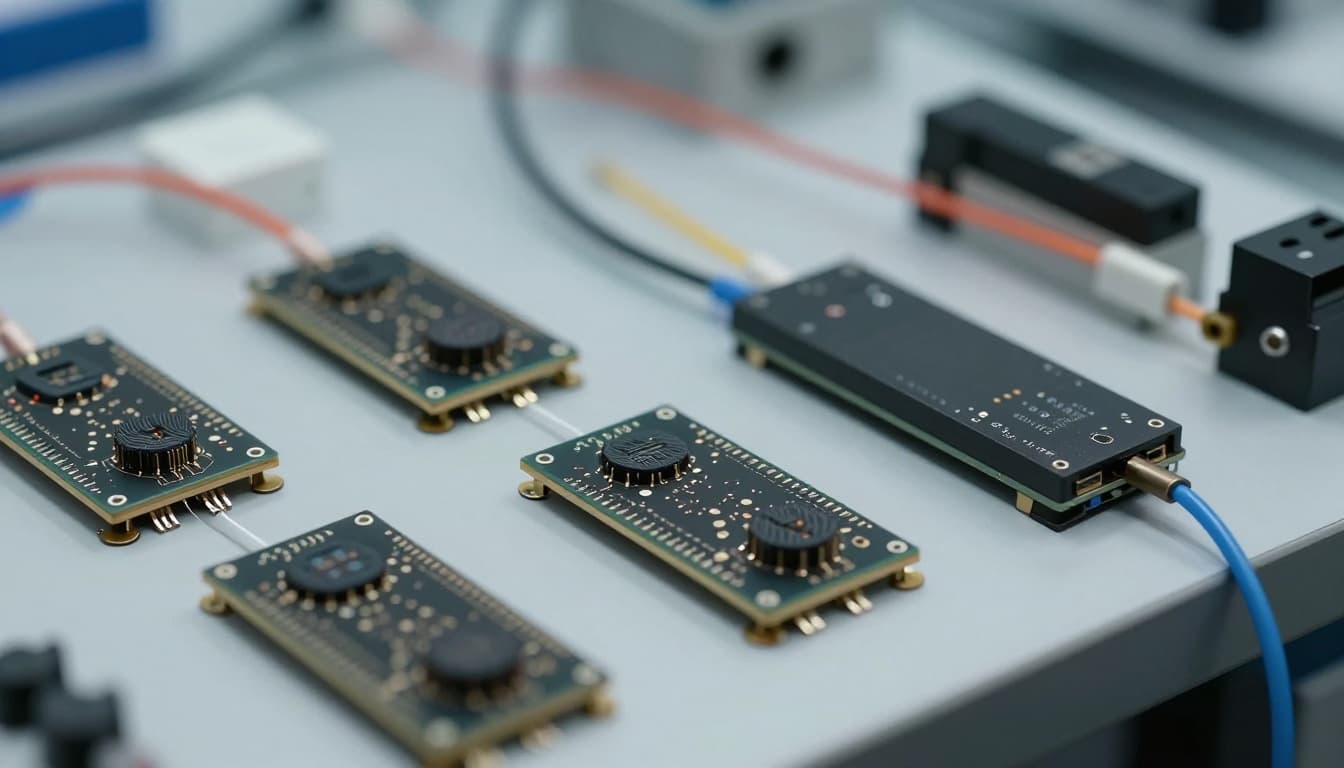 Photonic parts like these sit inside modules that push data through fiber.
I put Lumentum into two buckets, because the business really runs on two different cycles.
First is Cloud and Networking. This is the data center and telecom side. Think optical chips, lasers, components, and finished modules that plug into switches and routers. These parts turn electrical signals into light, move that light through fiber, then convert it back. The goal is more bandwidth with less heat, less power, and lower delay.
Second is Industrial Tech. This is the factory floor side. Lumentum sells lasers used in manufacturing, such as semiconductor processes, solar cell work, and parts of EV production. These lasers cut, mark, measure, and process materials with high precision.
A few context points help me place the company. Lumentum is headquartered in San Jose, and it sells globally across the Americas, Asia-Pacific, and EMEA. It started as a spin-off from JDS Uniphase, then expanded through acquisitions (including Oclaro, NeoPhotonics, and telecom product lines from IPG Photonics). That history matters because optics is a scale game. Product breadth and manufacturing know-how tend to compound over time.
Cloud and Networking, the growth engine tied to hyperscalers and AI workloads
 Hyperscale campuses depend on dense fiber links between buildings.
When I think about AI clusters, I picture a stadium full of people trying to pass notes at the same time. If the aisles are narrow, the whole thing slows down. In AI, the "aisles" are the links between GPUs, racks, and buildings.
Lumentum's Cloud and Networking products help widen those aisles. The company sells pieces that support high-speed optical links, including laser sources and coherent optics. (A simple definition: coherent is a way to send more data over fiber by encoding more detail into the light signal, then using advanced receivers to decode it.)
Patriot Market Research points to the move toward very high speeds, including 1.6T transceivers (hardware that can transmit about 1.6 terabits per second). I don't need every spec to matter. What matters is the direction: faster links reduce network congestion, which can raise the real output of expensive compute.
If AI spending keeps rising, I expect Cloud and Networking to stay the main growth driver for Lumentum.
Industrial Tech, a steadier business that can lag when factories slow down
 Industrial lasers help process wafers and materials with high precision.
Industrial Tech is easier to understand because it's physical. These lasers do things like precision cutting, wafer processing, and measurement tasks where tiny errors cost money. This segment can be profitable, but it usually follows manufacturing cycles.
In the Patriot Market Research notes I reviewed, Industrial Tech revenue declined in a recent period while Cloud and Networking surged. I read that as a simple signal: right now, the strongest pull is coming from data centers, not factory capex.
That split matters for investors. When Cloud and Networking runs hot, it can hide weakness elsewhere. On the other hand, a rebound in manufacturing can add a second engine later. For now, I treat Industrial Tech as the stabilizer, not the headline.
What is driving LITE's surge, the numbers that explain the hype
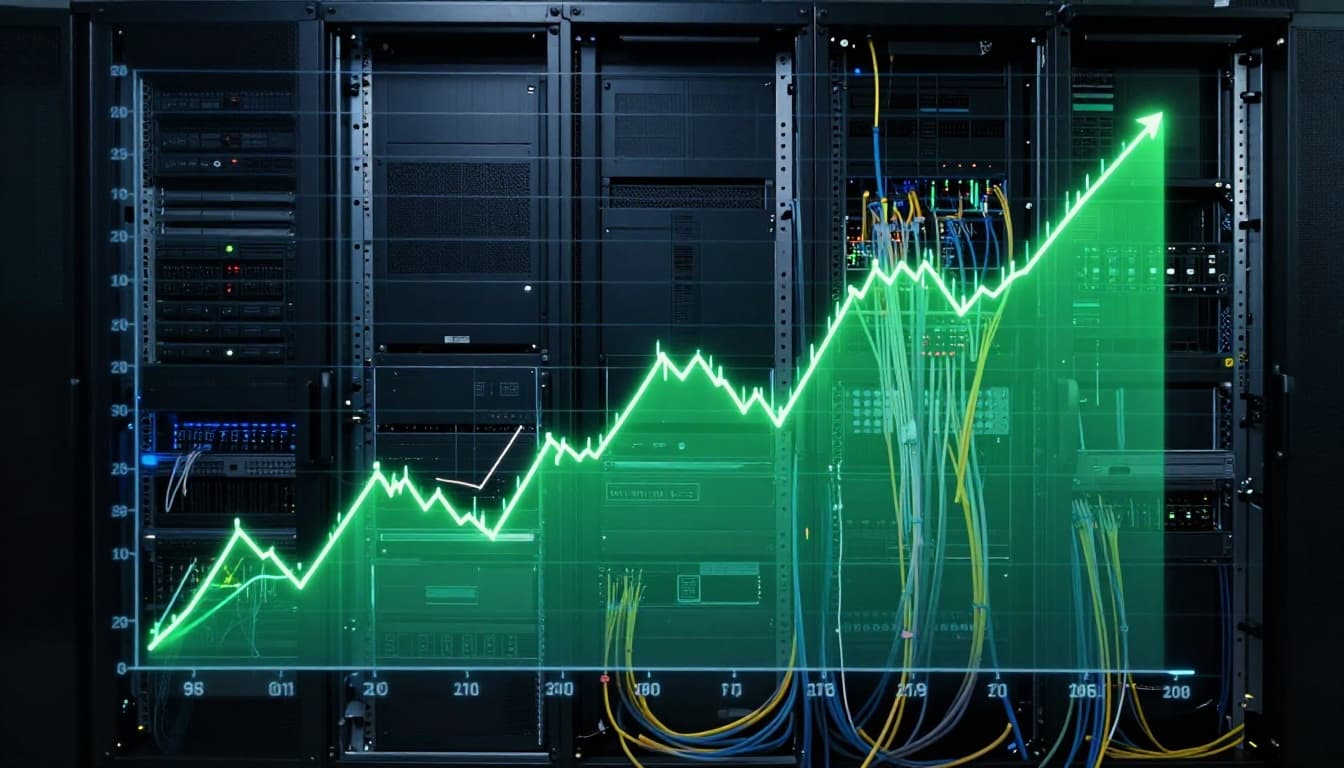 Market momentum has followed the story of AI optics demand.
The stock's move has been violent, and it didn't happen for no reason. Patriot Market Research describes exceptional momentum, including a roughly 673% one-year price gain, alongside strong analyst estimate revisions (19 upward EPS revisions and 18 upward revenue revisions over three months).
On the fundamental side, I pay attention to three themes: fast top-line growth, improving earnings power, and a product mix that lifts margins.
Per the Patriot Market Research snapshot, Q2 FY2026 revenue was about $665.5M, up roughly 65% year over year, with guidance implying 85%+ revenue growth for the next quarter. They also cite forward EPS growth around 141%. Separately, market data around late February 2026 shows Lumentum reported EPS of $1.67, beating estimates of $1.23, and far above the prior year quarter's $0.42.
Here's the way I simplify the factor picture from Patriot Market Research:
| Factor (PMR) | What it suggests for LITE |
|---|---|
| Valuation (D+) | Price is rich relative to many peers |
| Growth (A+) | Demand and revenue outlook look strong |
| Profitability (C-) | Mixed, improving but not perfect |
| Momentum (A+) | Market sentiment is very bullish |
| Revisions (A-) | Analysts are raising numbers |
The takeaway is straightforward. The market is paying up for growth, and it expects clean execution.
Orders and products that are moving the needle now (OCS backlog, 1.6T, and CPO)
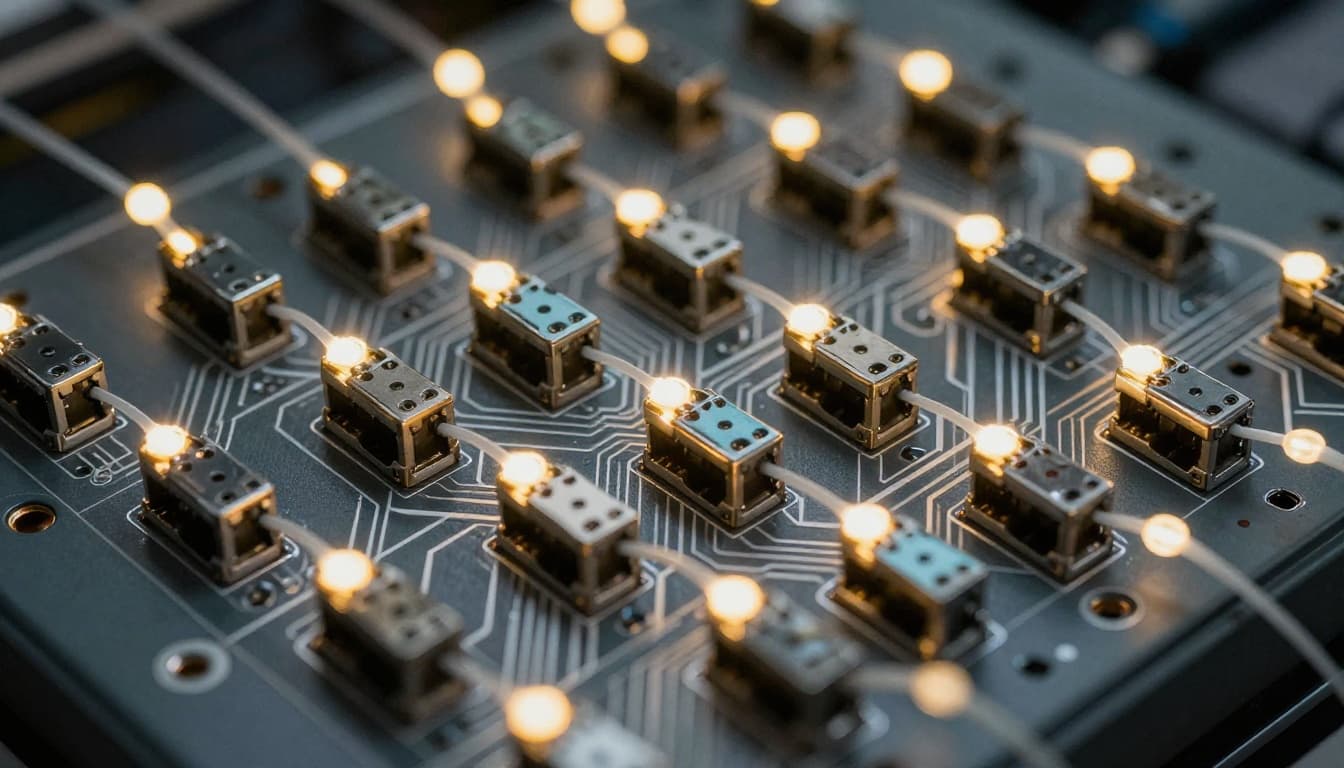 Optical circuit switching can route light paths without repeated electrical conversion.
One part of the story I keep coming back to is Optical Circuit Switching (OCS). In simple terms, an optical circuit switch sets up direct light paths, like creating dedicated lanes on a highway. That can reduce power use and cut network delays because the signal stays optical longer.
In the materials I'm relying on here, OCS demand shows up as a meaningful backlog, described as over $400M. Backlog matters because it's a bridge between hype and revenue. It doesn't guarantee timing, but it makes the demand feel less abstract.
Then there's co-packaged optics (CPO), which is the idea of placing optical components closer to compute and switching silicon to reduce power and improve bandwidth density. Patriot Market Research treats CPO as a longer-dated driver, including a multi-hundred-million-dollar order with deliveries expected in early 2027, plus planned shipments of ultra-high-power chips in the second half of 2026.
I view these as "prove it" milestones. If shipments land on time and scale well, the bull case gets stronger.
Capacity build and execution, why scaling production is part of the bull case
 Scaling optics production is a manufacturing challenge, not just a sales job.
In optics, demand alone isn't enough. You have to build and ship at scale, with strong yields (the share of units that pass quality checks). That's where the execution story lives.
The Patriot Market Research notes mention plans to expand factory capacity by 40%+ into 2026 to 2027, including sites like Sagamihara and Caswell. If that ramp goes well, it supports higher revenue without starving customers for parts.
Still, this is where things can go sideways. Supply constraints, long lead times, and competitive pressure can all show up as missed shipments or weaker margins. PMR flags this directly, and I agree with the framing: capacity build is part of the upside, but it also raises the penalty for mistakes.
When a stock prices in fast growth, even small production hiccups can hit hard.
The big risks I watch before buying LITE at these levels
 AI infrastructure spending can swing, and optics suppliers feel it quickly.
I like the business, but I don't like ignoring risk. Patriot Market Research raises three that I also prioritize: customer concentration, hyperscaler capex cycles, and valuation.
Customer concentration stands out the most. PMR notes that two major customers represent about 43% of revenue. That's not a moral issue, it's a volatility issue. A single delayed deployment can change a quarter.
Competition is also real. Lumentum goes up against strong players, and PMR names companies like Coherent and Marvell among key competitors (not the only ones, but relevant). In optics, leadership can shift faster than people assume because each speed jump can reshuffle who has the best performing, lowest cost part.
Finally, valuation can become its own risk. PMR's metrics highlight a premium setup, with a high forward P/E (they cite roughly 60x to 90x in their materials) and elevated multiples like price-to-book and EV-to-sales relative to sector medians. Meanwhile, market screens can show an even higher trailing P/E at times, because earnings often lag the pace of the story.
Customer concentration and capex cycles, what happens if hyperscalers pause
 Large buyers can change budgets quickly, and suppliers feel it fast.
When a company relies heavily on a few huge buyers, results can swing even if the long-term trend stays strong. Hyperscalers buy in waves. They also pause, re-plan, and shift vendors.
So I watch signals that show up before revenue does. I pay attention to:
- Hyperscaler capex comments in earnings calls, especially around networking and AI clusters
- Lumentum's backlog trend and conversion pace (orders turning into shipments)
- Any wording changes about supply constraints or customer timing
I'm not trying to predict a recession. I'm trying to avoid being surprised by an air pocket in spending.
Valuation versus reality, how "great company" can still be a risky stock
 Great products don't always mean a safe entry price.
I've learned this the hard way: a great company can still be a dangerous stock if expectations get too high.
Patriot Market Research captures this tension well. They rate LITE strongly on growth and momentum, while calling out stretched valuation and mixed profitability. That mix is common in fast-moving hardware cycles. Margins can improve, then stall, and the market reacts fast.
Another tell is the spread in price targets. In late February 2026, some published targets sat far below the then-current share price, while others climbed much higher. I don't treat targets as truth. Still, when a stock runs ahead of the consensus range, it usually means less forgiveness if guidance slips.
For me, valuation risk isn't about the number itself. It's about the gap between "good execution" and "perfect execution."
Conclusion: My checklist for tracking Lumentum from here
 The simplest way to stay grounded is to track a few repeatable signals.
When I step back, Lumentum is a clean way to express the AI interconnect theme, with real products in a real bottleneck. At the same time, Patriot Market Research is right to flag valuation and concentration, because those can punish sloppy entries.
My short checklist stays the same each quarter: I watch Cloud and Networking growth, OCS backlog conversion, CPO timeline milestones, capacity ramp progress, gross margin trend, customer concentration signals, and valuation versus guidance.
I'll keep sizing any position around those facts, not around the vibe. This isn't financial advice, it's just how I stay disciplined when a great story meets a pricey stock.
When you subscribe to the blog, we will send you an e-mail when there are new updates on the site so you wouldn't miss them.