(LRCX) Lam Research Corporation
A Long Runway in a Supply-Constrained WFE Cycle

When chip demand surges, investors usually look at the obvious winners, chip designers and foundries. Yet the quieter story often sits one layer deeper, in the equipment market that makes chip output possible. That is where Lam Research Corporation stands out.
The current wafer fabrication equipment, or WFE, cycle looks different from a normal upswing. Demand is rising fast, but supply cannot catch up quickly because fabs need more than tools. They also need power, cooling, buildings, trained labor, and time to qualify new lines. For investors, that mix can create a longer revenue runway than a typical one or two-year burst.
The WFE shortage is about more than tool demand
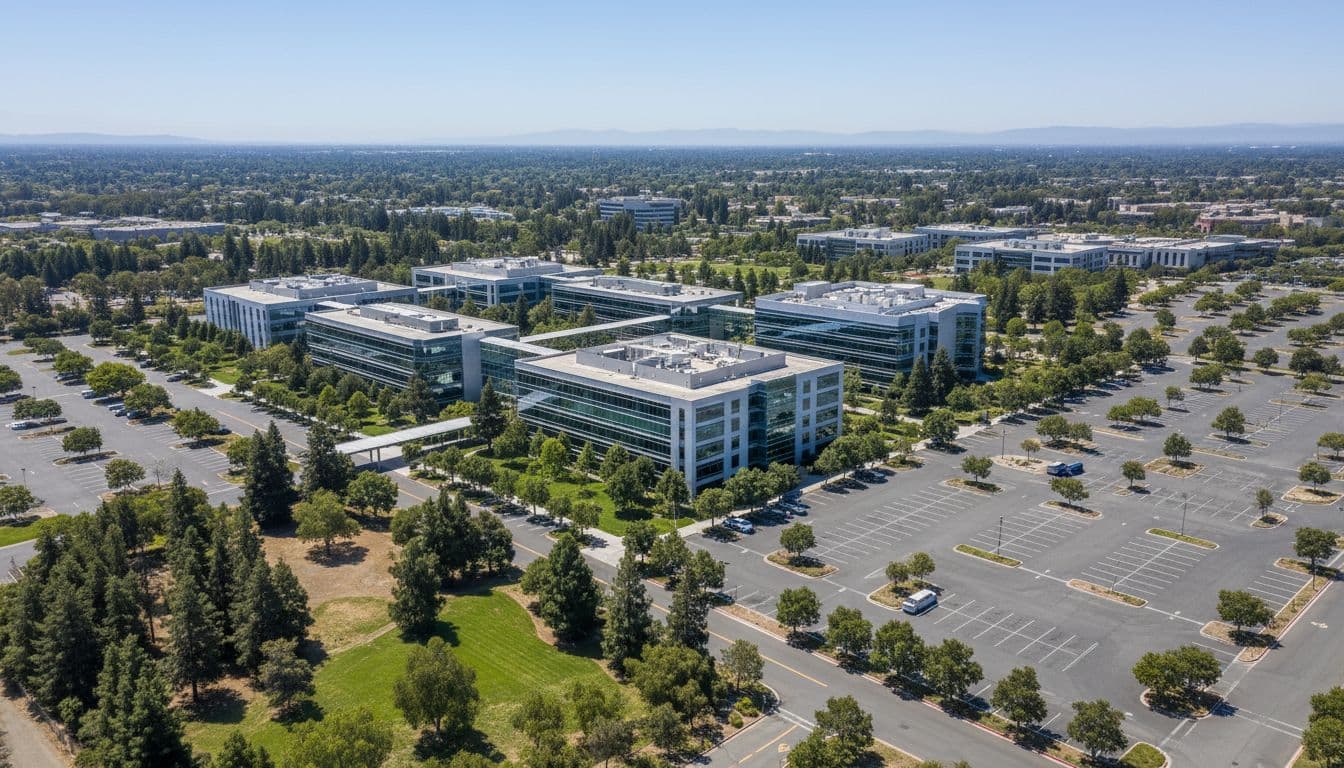
A supply-constrained WFE cycle starts with a simple problem. Chipmakers want more output than the system can add in real time. AI demand has pushed that imbalance higher, especially in leading-edge logic, advanced memory, and packaging.
Recent industry data points to WFE spending rising to about $135 billion in 2026, up from roughly $110 billion in 2025. That kind of jump matters on its own. Still, the more useful point is why spending keeps climbing. AI servers need high-bandwidth memory, and that memory uses far more fab capacity per unit than standard memory. One industry estimate suggests HBM can require around three times the manufacturing load of traditional memory.
At the same time, foundries are scaling hard. TSMC's advanced capacity, for example, is expected to rise from around 75,000 wafers per month in 2025 to roughly 120,000 to 130,000 by late 2026. That sounds huge, but it still does not remove the bottleneck.
In a tight WFE cycle, the limiting factor is not just the tool order. It's the whole fab ecosystem behind that order.
Think of it like an airport during a travel boom. Buying more planes helps, but gates, runways, fuel trucks, and crews also need to expand. Semiconductor fabs work the same way. Even when equipment demand is clear, cooling systems, electrical infrastructure, and cleanroom space can hold back the pace.
That matters for investors because it can stretch the cycle. Instead of one sharp spike in orders, spending tends to roll forward as projects move through each constraint.
Why Lam Research Corporation sits near the center of the buildout

Lam Research Corporation is well placed because it serves several of the process steps that fabs cannot skip. The company sells deposition, etch, and clean tools used in building advanced chips. Those steps matter even more as devices get smaller, layer counts rise, and yields become harder to protect.
Lam's product lineup covers key parts of the process flow. It has systems for tungsten and molybdenum deposition, copper interconnect, dielectric and conductor etch, through-silicon via etch, and wafer cleaning. It also sells service, spare parts, and upgrade packages, which often become more valuable when fabs try to squeeze more output from existing lines.
That broad role gives Lam two advantages.
First, it has exposure to multiple spending lanes. If one customer slows on a greenfield fab, another may still buy upgrades, spares, or productivity tools. Second, Lam benefits when complexity rises. Advanced nodes, 3D structures, and memory scaling all raise the need for precise etch and deposition steps.
Recent results back that up. Lam reported a record quarter with revenue of about $5.3 billion, gross margin above 50%, and operating margin near 35%. Net income rose sharply year over year, while deferred revenue reached roughly $2.77 billion. Just as important, service and spares posted record levels.
That mix matters. Equipment orders can swing, but a larger installed base feeds recurring support revenue. So, even if the order pattern gets choppy, the business does not rely on one stream alone.
Lam also enters this cycle from a position of scale. Founded in 1980 and based in Fremont, California, the company now serves major chip regions across the United States, Taiwan, Korea, Japan, China, Southeast Asia, and Europe. In a market where customers want trusted suppliers, installed-base depth matters.
Patriot Market Research quant analysis shows quality, with some caution

The market is not pricing Lam as a sleepy industrial name. Investors already see the growth case. Even so, recent Patriot Market Research snapshots still paint a favorable picture.
This first table shows the broader factor view from recent Patriot data.
| Metric | Recent Reading | Takeaway |
|---|---|---|
| Overall quant rating | 81/100 (A), separate snapshot 69.5/100 (B) | Positive, though not without debate |
| Valuation | 65/100, B+ | Not cheap, but not extreme for its market role |
| Growth | 91/100, A+ | Strong demand backdrop and earnings expansion |
| Profitability | 91/100, A+ | High margins support the story |
| Momentum | 66/100, B+ | Good, but not a straight-line move |
| Financial health | 85/100, A | Balance sheet remains solid |
The main message is simple. Lam scores best where investors usually want strength in a long cycle, growth, profitability, and financial health. Valuation is more mixed, which makes sense after a strong stock run.
Another Patriot snapshot dated March 24, 2026, showed Lam at about $238.84 with a BUY quant signal and a score near 3.90. Factor grades were also supportive, with B+ valuation, A- growth, B+ profitability, A- momentum, and B+ EPS revisions.
The technical picture is less clean, so short-term traders may want patience.
| Technical and risk metric | Reading | Interpretation |
|---|---|---|
| RSI (14) | 58.2 | Neutral, not overheated |
| MACD | 1.781 | Bullish momentum signal |
| Trend | Sideways | Consolidation after a strong move |
| Resistance | $256.37 | Near-term ceiling to watch |
| Support | $194.08 | Major downside reference |
| Beta | 1.79 | Higher volatility than the market |
| Annual volatility | 54.6% | Expect wide swings |
| Suggested stop loss | $214.44 | Useful for risk control |
So, the setup is attractive, but not calm. Investors can like the business and still respect the stock's swings.
Why this cycle could last longer than a normal upturn
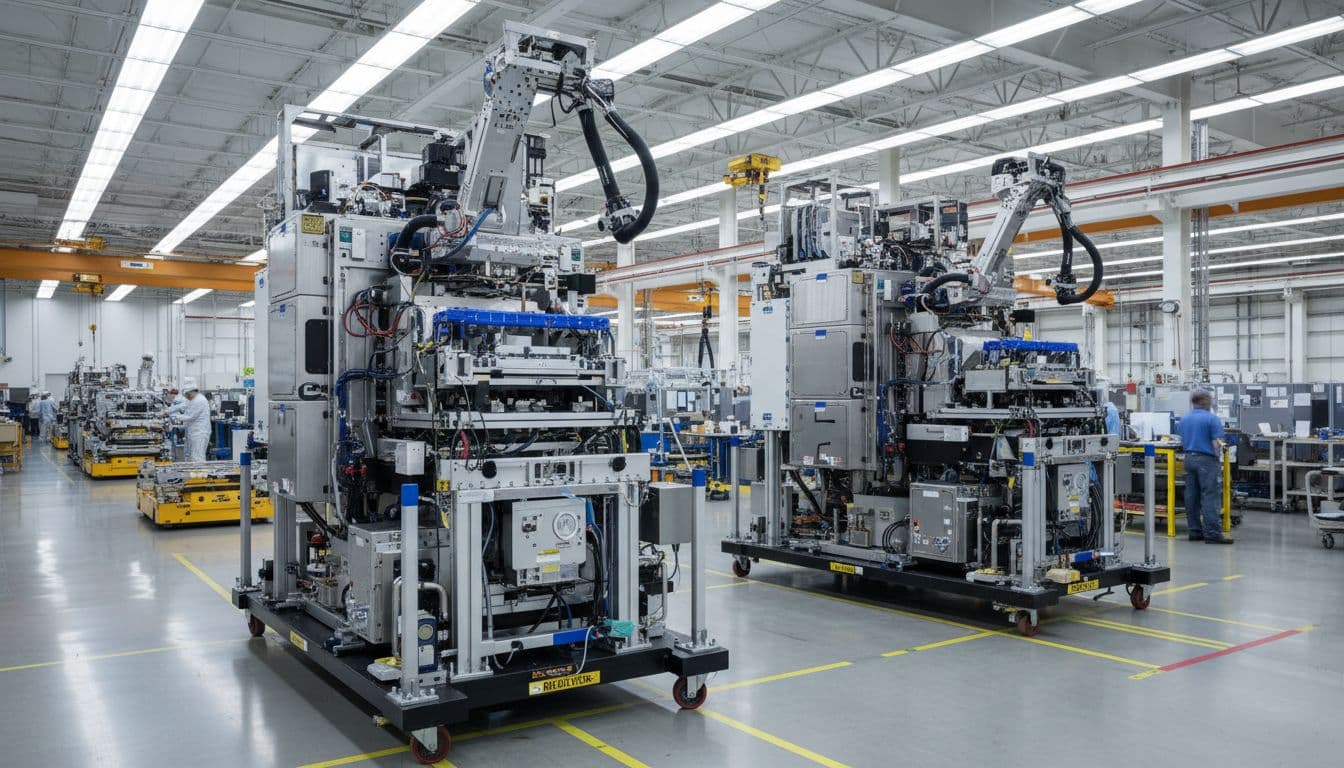
What turns a strong cycle into a multi-year runway? Usually, it takes more than demand. It takes friction on the supply side, and that is exactly what the industry has today.
AI spending is not just lifting one chip category. It is pulling on logic, memory, and advanced packaging at the same time. That broad demand means more tools are needed across several steps of production, not only at one bottleneck.
Analyst models now point to Lam revenue reaching about $22.4 billion in 2026, then roughly $27.5 billion in 2027, and near $31.1 billion in 2028. Those are estimates, not promises. Still, they show what the market expects when WFE remains tight and customers keep building.
There is another reason the runway may last. Fabs don't stop spending once a line opens. They tune yield, add chambers, swap in better process modules, and buy service support. In other words, the first equipment sale often opens the door to follow-on revenue.
Lam benefits from that pattern because its tools sit in areas where process control matters. As chip structures get more complex, small performance gains can have large value for the customer. A cleaner wafer edge or a more precise etch can improve output enough to justify more spending.
For investors, that creates a useful blend. Lam gets upside from fresh WFE demand, but it also has support from its installed base. That is often how long runs stay alive.
The main risks investors should respect
No strong thesis is complete without the weak spots.
The clearest risk is China. Lam has said a new affiliate rule is expected to cut about $200 million from one quarter and around $600 million from calendar 2026 revenue. China should still matter, but its share of total sales is expected to drop below 30 percent.
That does not break the story, though it can affect quarter-to-quarter comparisons.
Another risk is timing. A supply-constrained cycle helps extend demand, but it can also delay revenue recognition if customer sites are not ready for tool installs. So, a good long-term setup can still produce uneven near-term numbers.
Valuation also deserves respect. Lam is not priced like a distressed stock. Investors are paying for quality, margins, and exposure to advanced semiconductor spending. If AI enthusiasm cools or WFE budgets pause, the share price could react faster than the business itself.
Finally, this is a volatile name. A beta near 1.8 tells you the stock can move hard in both directions. That may suit long-term investors, but it can shake out anyone using a short time frame.
The bottom line for investors

Lam Research Corporation looks well placed for a supply-constrained WFE cycle that could run for years, not quarters. Demand is strong, but the bigger point is that supply cannot expand instantly because fabs need much more than equipment alone. As a result, spending may stay elevated longer than many investors expect.
Lam brings the right mix for that backdrop, process depth, strong margins, a growing service base, and exposure to advanced nodes. Runway is the word to watch. If WFE stays tight and AI-driven fab expansion keeps moving, Lam may have room to compound well beyond the next quarter.
When you subscribe to the blog, we will send you an e-mail when there are new updates on the site so you wouldn't miss them.