(PBR) Petrobras
Cheap Valuation, Strong Margins, Real Political Risk

Petrobras, trading in the US as PBR, is Brazil's state-controlled energy giant. Investors watch it for one simple reason: it can throw off a lot of cash when oil prices cooperate, yet the stock can also swing hard on politics and policy.
What makes Petrobras unusual is the mix of strengths and friction. On one side, it has massive scale and low-cost pre-salt production offshore Brazil. On the other, it operates under government control, where fuel pricing and dividend decisions can shift with public priorities.
Right now, the signal looks mixed. The valuation looks very low versus many large energy peers (forward P/E near 7 from the provided figures). Profitability also screens strong, with an EBITDA margin around 39% and a net margin near 16% in the same dataset. Still, the biggest risks are not hidden, they're structural: commodity swings, heavy spending needs, and the reality that the controlling shareholder can change the rules.
Petrobras in plain English: what the company does and where the money comes from

Petrobras is an integrated oil and gas company founded in 1953 and based in Rio de Janeiro. In plain terms, it does three things that roll into one business.
First, it finds and produces oil and gas (this is usually the main profit engine). Second, it refines crude into fuels and sells them through Brazil's logistics and marketing chain, while also exporting products. Third, it runs gas and "lower carbon" activities, which include natural gas logistics, LNG trading, power generation, and biofuels.
Brazil's offshore pre-salt fields sit at the center of this story. They're a major source of Petrobras's crude supply. That crude can feed domestic refineries, support exports, and keep the system running like a factory that never sleeps. Because of that integration, results can look steadier than a pure exploration company, but policy can also get in the way.
Pre-salt offshore fields: Petrobras's main edge (and why lifting costs matter)

Investors hear "low lifting costs" a lot, so it helps to translate it. Lifting cost is the cost to pull one barrel of oil out of the ground (or seabed), before you even refine it. Lower lifting cost usually means more breathing room when prices fall, and fatter margins when prices rise.
That's why Petrobras's pre-salt position matters. Ultra-deepwater projects are expensive to build, but once they run well, production can be efficient at scale. When oil prices jump, companies with strong operations can see profits rise faster than revenue, because many costs don't rise as quickly.
Some analyst scenarios highlight this operational "spring effect," where free cash flow could look exceptionally high in a bullish oil environment. That is not a promise, but it explains why PBR can move fast when the tape turns positive for crude.
Refining and fuel sales: how Petrobras turns crude into cash inside Brazil
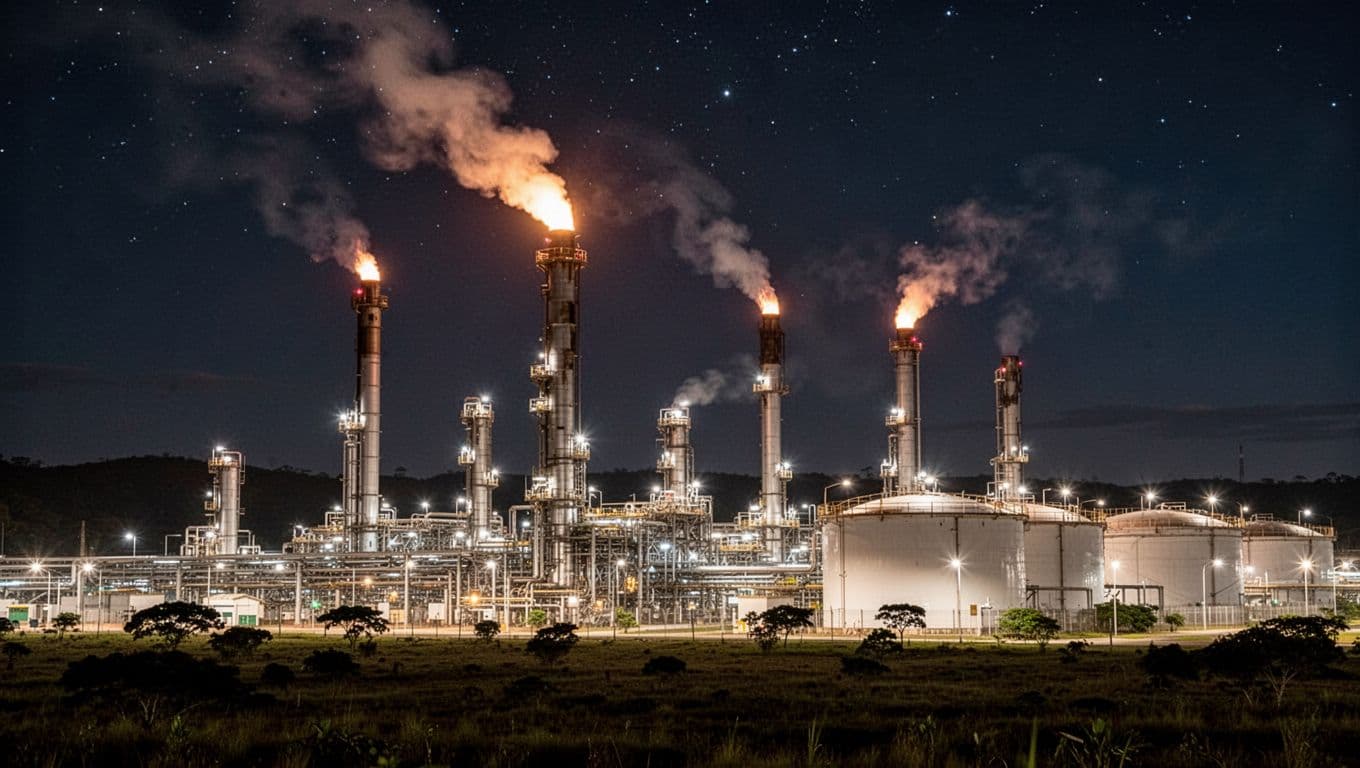
Refining, transportation, and marketing can be less glamorous than drilling, but it often decides how smooth earnings feel quarter to quarter. Petrobras takes crude, runs it through refineries, then moves fuels through terminals, pipelines, shipping, and distribution.
When crude prices swing, refining can sometimes offset upstream volatility. For example, lower crude input costs can help refining margins, depending on product prices and local demand. Exports also matter because they can redirect volumes when domestic demand softens.
Still, the policy angle is always present. If the government pushes for lower pump prices to fight inflation, refining and marketing margins can compress. For investors, that's the key trade: integration can stabilize operations, but it can also create more "policy surface area" where politics affects profits.
The 2026 investor snapshot: valuation, profitability, and what the latest numbers suggest

If you screen Petrobras in early 2026, the first thing that jumps out is pricing. The dataset provided shows a market cap around $112.65B, a forward EPS estimate near 2.45, and a forward P/E around 7.34. Those are "cheap" multiples compared with a sector median P/E referenced near 16 in the same research notes.
Profitability also stands out. The same notes cite an EBITDA margin around 39% and a net income margin near 16%, both stronger than many broad energy comparables. Meanwhile, enterprise value metrics also look discounted, with EV/EBITDA around 4.68 in the snapshot.
Recent quarterly context can look choppy, which is normal for commodity-linked names. In the provided earnings notes for the March 5, 2026 release, revenue came in around $23.80B and beat expectations, while GAAP EPS was $0.44, missing the consensus by about $0.13. That's a good reminder: Petrobras can execute operationally and still show uneven per-share results, due to taxes, FX effects, and one-off items.
Here's a quick view of the same data points in one place.
| Metric (from provided dataset) | Snapshot value |
|---|---|
| Market cap | ~$112.65B |
| Enterprise value (EV) | ~$177.63B |
| Forward EPS estimate | ~2.45 |
| Forward P/E | ~7.34 |
| EV/EBITDA | ~4.68 |
| EBITDA margin | ~39% |
| Net margin | ~16% |
| 52-week range | ~$11.03 to $19.02 |
The practical takeaway is simple: investors should focus on cash generation, capex discipline, and dividend rules, not just the headline P/E.
Why PBR can look "cheap" on P/E and EV/EBITDA, but still be risky

Low multiples can mean "mispriced bargain." They can also mean "the market doesn't trust the story."
In Petrobras's case, the discount is easy to see in the supplied comparisons: forward P/E around 7 versus a sector median around 16, plus an EV/EBIT figure around 6 versus a sector median around 15. Those gaps don't happen by accident. They usually reflect risk the market thinks is hard to hedge.
Political control is the obvious one, but not the only one. Oil prices can fall quickly. Large offshore projects demand years of spending before they pay back. Currency moves can also reshape reported results for US investors.
A low P/E can be a sale price, but it can also be an "insurance premium" the market charges for uncertainty.
So, yes, PBR can look statistically cheap. Still, cheap doesn't mean calm.
Growth signals: strong forward EPS expectations, but uneven revenue trends
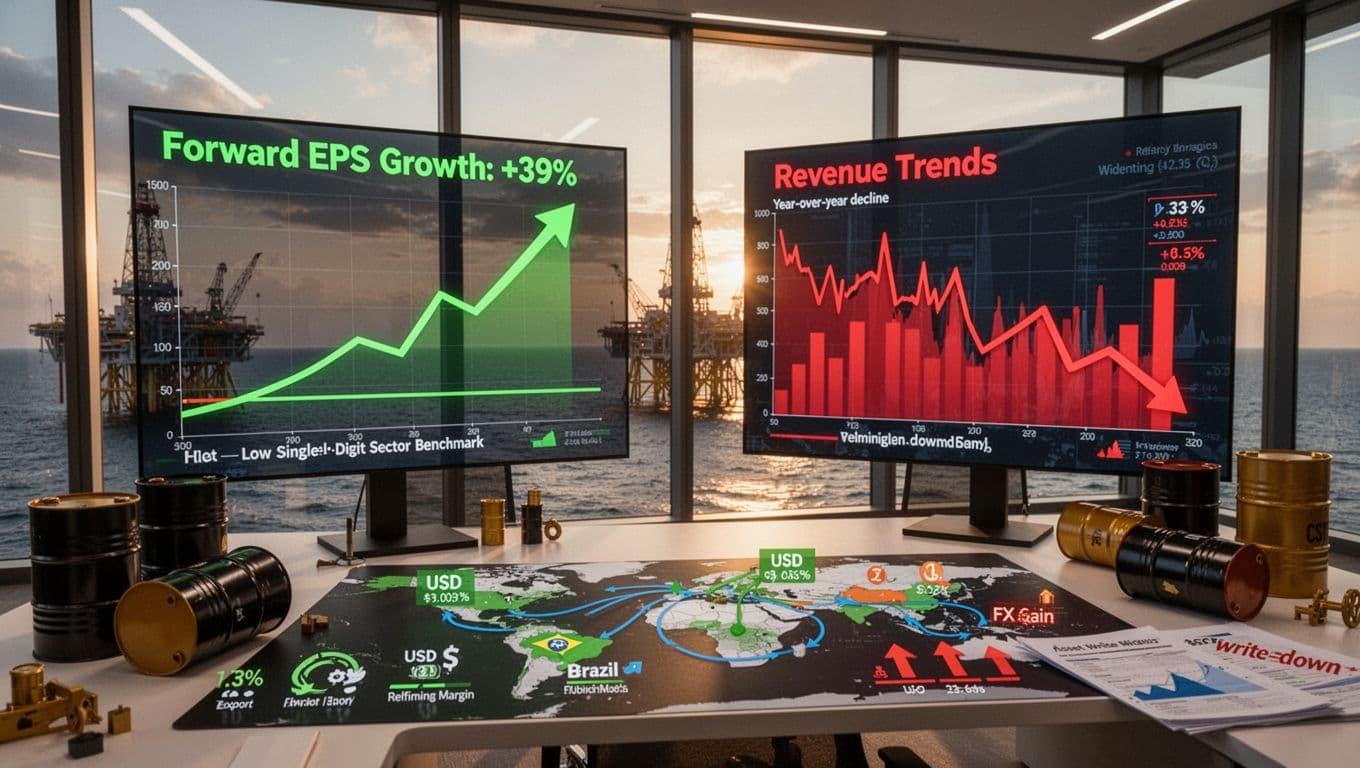
The growth picture in the notes looks like a tale of two charts. Forward EPS growth is shown near 39%, which is strong and well ahead of a low single-digit sector reference in the same research. Yet revenue trends are less clean, including a noted year-over-year decline in one comparison.
That split is common in oil and gas. EPS can jump on stronger pricing, better costs, taxes, financial items, or even share count changes. Revenue, by contrast, is tied more tightly to realized prices, volumes, and FX translation.
A few forces can pull revenue and EPS in different directions:
- Changes in oil and product prices from quarter to quarter
- Export volumes versus domestic sales mix
- Refining margins that widen or shrink quickly
- Currency shifts (especially BRL versus USD reporting effects)
- Non-operating items like FX gains and asset write-downs (both appear in historical statements)
For investors, this means one thing: don't anchor on a single quarter. Track the trend in operating performance and the funding plan behind it.
Projects and strategy to watch: where Petrobras is spending billions through 2030

Petrobras remains a capital-heavy business. That's not a flaw, it's the nature of deepwater oil. The company invests huge sums up front, then tries to run long-life assets efficiently for years.
The research notes you provided emphasize two strategic themes. First, Petrobras continues to concentrate on pre-saltdevelopment, because that's where its best economics usually sit. Second, it keeps a foot in gas and lower-carbon initiatives, including biofuels, alongside refinery and logistics work.
For investors, spending only matters when it's matched with returns and timing. Offshore projects can drive production growth and future cash flow, but they can also pressure free cash flow today. That tension becomes even sharper when oil prices soften.
The other reason strategy matters is that it interacts with policy. A state-controlled company may invest with national goals in mind, not only near-term shareholder yield. That doesn't automatically mean "bad," but it does change how you should value the cash flows.
FPSOs and new production systems: what they mean for output and cash flow timing

An FPSO is basically a floating production factory. It processes oil and gas at sea and helps move production to shore or to tankers. FPSOs are central to many Brazilian deepwater projects, but they come with a simple trade: big capex now, cash later.
That timing matters for PBR holders. When Petrobras commits to multiple new production systems through 2030, it's also committing to years of construction, commissioning, and ramp-up risk. If schedules slip, cash arrives later. If costs rise, returns shrink.
On the flip side, when FPSOs start up on time and perform well, they can lift output and support years of operating cash flow. That's why investors often watch project execution as closely as oil prices.
In short, FPSOs can extend the life of the growth story. They also test management discipline.
Exploration bets like the Equatorial Margin and overseas options like Namibia

Development projects are about producing known resources. Exploration is about finding the next wave.
The notes mention interest in frontier areas, including Brazil's Equatorial Margin (often discussed near the Amazon River mouth). These prospects can be politically sensitive and permit-heavy, so timelines can change fast. Even after permits, drilling results are uncertain. A dry well burns cash without adding future production.
The same research also points to overseas options such as Namibia as a possible diversification path. That can reduce reliance on a single geography, but it still depends on approvals, partners, and successful drilling.
Investors should treat exploration like an option with a cost. It can pay off, but the base case should stay grounded in the existing pre-salt engine.
Big risks to understand before buying PBR

Petrobras can look like a value stock. Still, value only works when risks stay priced and manageable. The research notes you shared flag three practical concerns: state influence, capital intensity, and financial flexibility when oil weakens.
Commodity risk is the constant background noise. A drop in crude can hit revenue and cash flow quickly. At the same time, deepwater projects don't pause easily. You can slow spending, but not without consequences.
Currency risk also matters for US investors. Petrobras reports in Brazilian reais, while the ADR trades in USD. Exchange-rate moves can affect translated results and investor sentiment, even when operations stay steady.
Treat PBR like a hybrid of an oil major and a policy instrument, because both forces can move the stock.
State control and politics: how it can impact fuel prices, capex, and dividends

Brazil's government is the controlling shareholder. That can provide benefits, like access to strategic resources. However, it can also change what "success" means.
For example, Petrobras may face pressure to keep fuel prices lower than global parity during inflationary periods. It may also be encouraged to invest more aggressively, even if returns look lower in the short run.
Dividend policy is another flashpoint. Petrobras has paid meaningful dividends in certain years (as shown in historical per-share figures), but policy can change. Some data feeds even show no current dividend at times, which highlights how quickly expectations can shift around payout decisions.
So, when you buy PBR, you're also buying governance risk. That risk can stay quiet for years, then show up all at once.
Oil price swings and heavy spending: the squeeze risk when crude falls

The toughest setup for Petrobras is a two-part squeeze: lower oil prices plus high committed spending.
When crude drops, cash inflow can fall fast. Meanwhile, offshore projects still need equipment, ships, people, and long lead-time contracts. If management tries to defend shareholder returns through dividends during a downturn, balance-sheet pressure can rise. If it cuts payouts instead, the stock can re-rate lower, even if the decision is rational.
Debt levels and interest costs matter here. Petrobras has improved from past peaks, yet investors should still track how much room it has to fund projects without stretching.
In other words, the downside case is less about a single bad quarter, and more about a tough oil tape lasting long enough to test the plan.
Bottom line: is Petrobras (PBR) worth owning in 2026?

Petrobras offers a rare mix: global-scale production, strong pre-salt economics, and a valuation that screens inexpensive on common metrics. The provided snapshot points to high margins, discounted EV multiples, and forward earnings expectations that imply meaningful upside if conditions stay supportive.
At the same time, the risks aren't abstract. Political control, large capex cycles, and oil price volatility can all override "cheap" valuation signals.
If you're considering PBR, keep a simple investor checklist:
- Track oil prices and refining margins, because they set the cash flow ceiling.
- Watch FPSO delivery and ramp-up execution, since timing drives returns.
- Follow exploration permit progress in frontier areas, because delays can reshape growth.
- Monitor debt and free cash flow trends, especially in weaker oil periods.
- Read every dividend update carefully, because policy changes move the stock.
The best approach is sizing your position to the risk and pairing it with diversification. After all, PBR can reward patience, but it rarely rewards complacency.
When you subscribe to the blog, we will send you an e-mail when there are new updates on the site so you wouldn't miss them.