(SNDK) Sandisk Corporation
Bull Case, Risks, and 2026 Outlook

Sandisk Corporation is back as a standalone public company, and that alone has changed how investors look at it. Since separating from Western Digital in February 2025, SNDK has become a cleaner way to invest in NAND flash storage, not a mixed bundle of flash and hard disk assets.
That matters because the market cares about one story right now: storage tied to AI, cloud, and data centers. Patriot Market Research rates SNDK a Strong Buy, citing growth, momentum, and estimate revisions. Still, this isn't a no-risk setup. Memory is cyclical, pricing can swing hard, and valuation remains a live debate.
What Sandisk does, and why its business matters now

Sandisk sells storage products built around NAND flash memory. In plain English, that means it makes and supports the devices that hold data fast, quietly, and in a compact form. Its lineup includes SSDs, memory cards, USB drives, embedded storage, wafers, and related components.
Those products end up in more places than many investors realize. They support PCs, phones, tablets, gaming systems, cars, cloud servers, and enterprise infrastructure. As data grows, storage becomes less like a shelf in a closet and more like the plumbing in a city. When more data flows, the pipes have to get bigger and faster.
Headquartered in Milpitas, California, Sandisk now trades independently on Nasdaq under SNDK. The spin-off gave the company a clearer identity, and that clarity has drawn attention from both analysts and growth-focused investors.
The timing also helps. AI workloads create huge amounts of data, and those systems need fast access to it. At the same time, cloud spending keeps pushing storage higher up the value chain. Sandisk sits right in the middle of that demand.
How the split from Western Digital changed the investment story

The history here matters. SanDisk began in 1988, Western Digital bought it in 2016, and the flash business became independent again on February 24, 2025. So while the current standalone company is new, the operating roots go back decades.
That split changed the investment case in a simple way. Before, investors had to value the flash business alongside Western Digital's hard drive operations. Now they can judge Sandisk on its own flash exposure, its own margins, and its own growth path.
Another piece fell into place in February 2026, when Western Digital sold its remaining stake. That sale created some short-term pressure, and the market briefly reacted to dilution fears. Yet it also removed a major overhang, which often matters more over time than a one-day dip.
Where Sandisk fits in the storage market
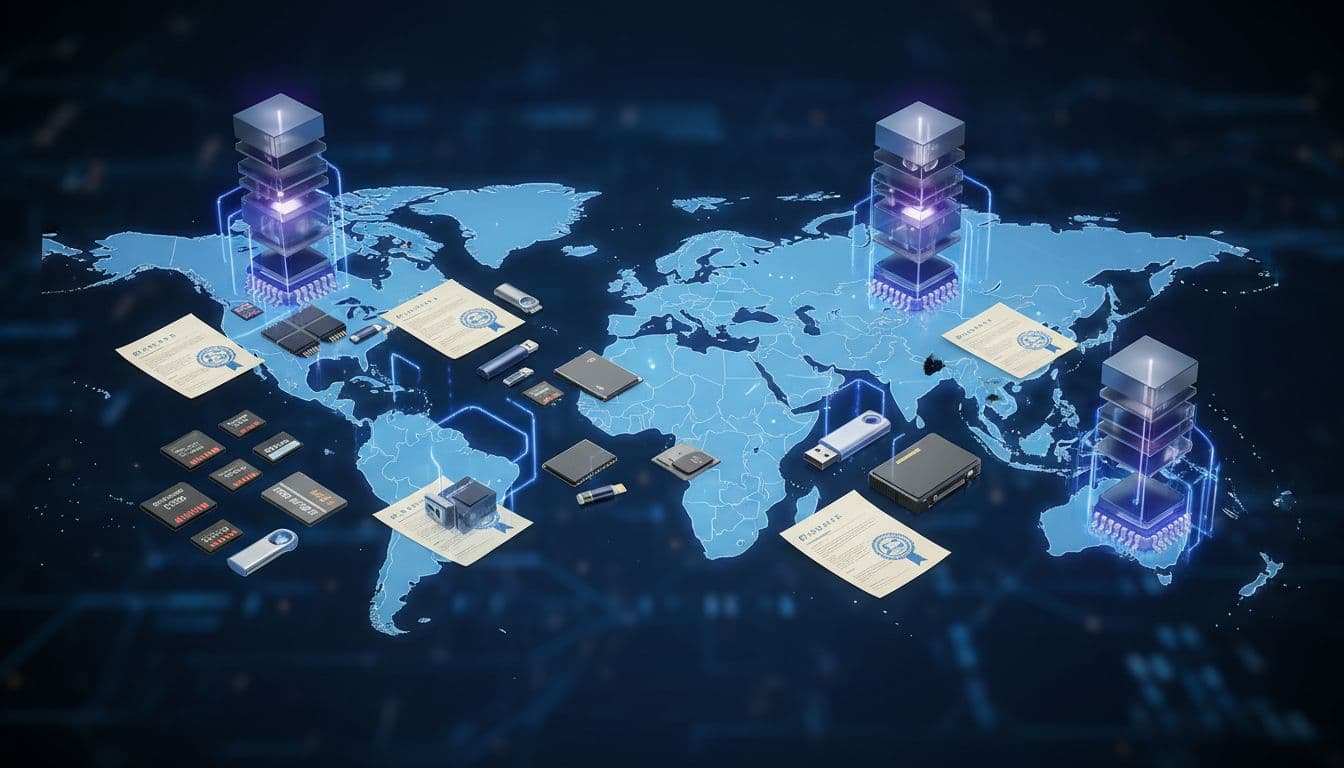
Sandisk competes in a crowded field that includes Micron, Samsung, and SK hynix. Each rival brings scale, manufacturing depth, or broad memory exposure. So why does Sandisk still stand out?
First, it has a well-known consumer brand. Second, it serves cloud, client, and consumer markets, which gives it broad reach across end demand. Third, the supplied research points to a deep patent base, with roughly 7,900 granted patents and about 3,200 pending applications worldwide. That doesn't guarantee pricing power, but it does support product design, licensing strength, and market presence.
Sandisk also benefits from being understood. Investors know what it sells, who it sells to, and which industry cycle drives the stock. That's useful in a market where many tech stories feel too broad or too hard to model.
The key reasons many bulls like SNDK stock

The bullish case for SNDK isn't mysterious. It's built on a few simple ideas that fit together well.
First, AI and data center growth are pushing more demand toward high-speed flash storage. Next, the spin-off created a focused business that the market can value more directly. Also, Patriot Market Research sees strong growth, upbeat revisions, and powerful share momentum.
SNDK looks strongest when investors want direct exposure to NAND demand, not a mixed hardware story.
That doesn't make the stock cheap or safe. It does explain why so many eyes are on it.
AI and data centers are driving demand for flash storage

AI systems don't run on compute alone. They also need storage that is fast, dense, and reliable. Training, inference, retrieval, and data pipelines all create heavy read and write activity. Slow storage can become a bottleneck, much like a wide highway narrowing into one lane.
That's where NAND-based products help. Enterprise SSDs can move data faster than older storage formats, and they do it in a form factor that data centers already understand well. As a result, flash becomes more important as AI clusters grow.
Recent market commentary supports that trend. The supplied research and recent updates both point to stronger average selling prices and better demand in data center storage. In March 2026, Sandisk also benefited from earnings optimism after a beat and a stronger near-term outlook. Better pricing has helped the whole flash group, at least for now.
Its Kioxia partnership gives Sandisk a capital-light edge

One of the more interesting parts of the story is Sandisk's relationship with Kioxia through Flash Ventures. In simple terms, this gives Sandisk access to advanced NAND manufacturing without bearing the full cost of owning everything alone.
That matters because semiconductor production is expensive. If one company can share part of that burden while still getting leading technology, it may protect margins and free cash flow better than a fully self-funded model.
Patriot Market Research highlights this point often. The firm sees the Kioxia structure as a real edge, especially when paired with disciplined capacity planning and long-term customer agreements. For investors, the appeal is clear: Sandisk gets exposure to strong demand without taking on the heaviest version of the factory bill.
What the numbers say about growth, valuation, and momentum
The supplied PMR research paints a very strong picture on growth and market sentiment, but a more mixed picture on valuation and profitability. That balance is important because it explains both the excitement and the caution around SNDK.
Here is the PMR Quant Rating Explanation in table form:
| PMR Factor | Reported View | What it suggests |
|---|---|---|
| Valuation | A to A- | Some forward metrics look reasonable, but not all valuation measures agree |
| Growth | A+ | Earnings and revenue growth expectations are far above many sector peers |
| Profitability | B- | Margins and cash flow show strength, but net profitability still looks uneven |
| Momentum | A+ | The stock's price action has been exceptionally strong |
| Revisions | A to A+ | Analysts have raised estimates aggressively, with no downward revisions in the supplied research |
PMR materials put forward EPS growth near 40%, a forward P/E in roughly the mid-to-high teens, and a forward PEG around 0.08. At the same time, price-to-sales has been cited near 11, which is far richer than many hardware peers.
The numbers support the bull case, but they don't erase the cycle.
Why Patriot Market Research sees strong upside

Patriot Market Research isn't just reacting to the stock chart. Its thesis centers on strong growth, better pricing, and rising confidence from analysts. Across the supplied research, SNDK shows a long list of upward EPS and revenue revisions, with no downward revisions over recent periods.
PMR also points to recent earnings outperformance. Revenue growth, EPS strength, and improved average selling prices have all helped sentiment. In addition, enterprise and data center exposure gives Sandisk a better narrative than a plain consumer storage story.
Momentum adds fuel here. Some PMR comparisons show one-year price performance above 1,200%, which is extreme by any standard. That kind of move attracts attention, but it also raises the stakes.
Why the valuation debate is not going away

This is where the stock gets tricky. On one hand, SNDK can look attractive on forward earnings and PEG. On the other hand, it looks expensive on price-to-sales, and the share price has already had a huge run since the split.
Some analysts worry the market is pricing in peak conditions. That's a fair concern in memory, where pricing often improves quickly and then reverses when supply catches up. A stock can be both a great business story and a hard stock to buy at the wrong point in the cycle.
So the valuation argument doesn't really have a clean winner. It depends on how long strong NAND pricing lasts and how much of today's AI demand proves durable.
The biggest risks investors should watch before buying SNDK

Even the strongest flash names can hit sharp downdrafts. The memory market has a long history of oversupply, price pressure, and swings in customer orders. When prices rise, producers usually add capacity. Later, that added supply can become its own problem.
That risk hasn't disappeared just because AI is strong. If cloud demand cools, or if competitors ramp production faster than expected, the pricing backdrop could soften fast. Then the same operating leverage that helps on the way up can hurt on the way down.
Western Digital's February 2026 exit adds another layer. The sale removed an overhang, which helps. Still, some investors will ask why a former parent chose to sell into strength. That's not a verdict on the business, but it can influence how the market reads valuation.
NAND pricing can change fast, and that can hit margins

Memory pricing behaves more like a commodity cycle than a slow, steady subscription business. When supply is tight, prices can jump and margins expand. When supply loosens, those gains can fade in a hurry.
That's why PMR's caution matters. Its research makes the bullish case clearly, but it also warns that current strength may reflect unusually favorable conditions. If AI and cloud demand stop tightening supply, pricing power could weaken.
For SNDK, that would likely show up in revenue, margins, and investor sentiment at the same time.
A focused business can be a strength, but also a weakness

Being a pure NAND story has obvious benefits. Investors get a simpler thesis, and management gets a cleaner operating focus. Yet focus also means less diversification.
Sandisk doesn't have the same breadth as a larger, more diversified chip company. If long-term hyperscaler deals are priced too aggressively, or if one end market weakens, the company has fewer places to hide. In strong markets, focus looks smart. In weak ones, it can feel narrow.
Sandisk has a compelling setup in 2026. It's independent again, tied to AI and cloud demand, and backed by a favorable view from Patriot Market Research. Still, the stock is not a straight line higher story, because valuation and memory-cycle risk remain real. Investors and analysts should keep watching NAND pricing, data center demand, earnings revisions, and management's execution as a standalone company.
When you subscribe to the blog, we will send you an e-mail when there are new updates on the site so you wouldn't miss them.