(NVDA) NVIDIA Corporation
Strength, Value, and Risk

Few companies sit closer to the center of the AI boom than NVIDIA. If you follow Technology and Semiconductors, you've already seen how one stock can shape an entire market.
Right now, NVDA trades near $177.39, with a market cap around $4.31 trillion. That scale is huge, yet the story isn't simple, because sentiment looks bullish but still careful.
What NVIDIA does, and why its business reaches far beyond gaming
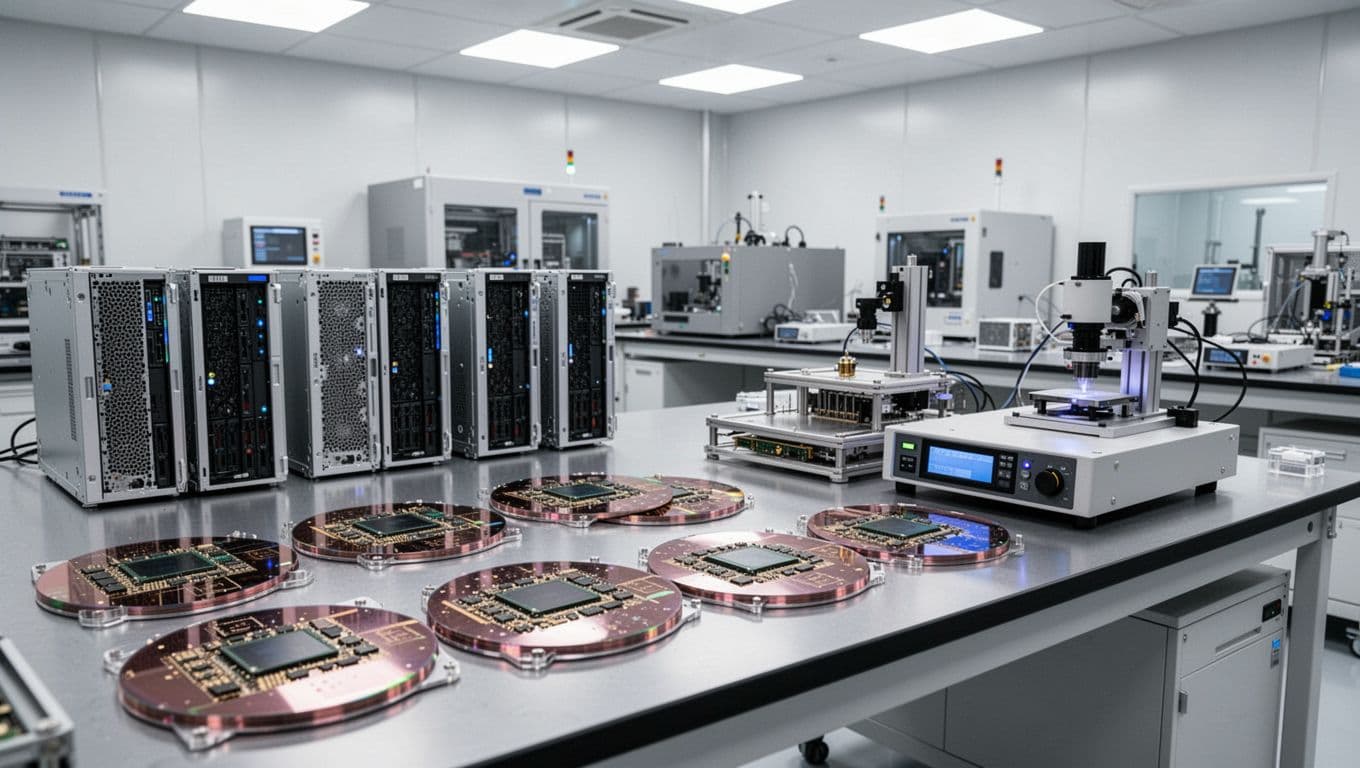
Many investors still think of NVIDIA as a gaming chip company. That's old news. Gaming helped build the brand, but the business now reaches much further.
At its core, NVIDIA designs high-performance chips and the software stack that makes them useful. Those chips started as graphics processors for games. Now they also power AI training, AI inference, data centers, advanced simulation, robotics, and professional computing.
That shift matters because AI demand is bigger than the gaming market. Large cloud providers need massive computing power. Enterprises want faster model training. Developers need tools that work at scale. NVIDIA sells into all three.
How NVIDIA became a core supplier for AI, data centers, and high performance computing

The easiest way to think about NVIDIA is this: it sells the engines behind modern AI. If AI models are race cars, NVIDIA often supplies the motor, the fuel system, and part of the track.
Its GPUs handle the heavy math needed to train large models. Those same chips also help run AI tools after deployment. So NVIDIA benefits on both sides, building the model and serving it to users.
Because of that, the company sits in a strong spot across Technology and Semiconductors. It isn't only shipping parts. It's providing a platform that many customers already know how to use.
The main business engines investors should watch

Data center demand is the biggest driver now. That's where the AI boom shows up most clearly. Gaming still matters, because it keeps NVIDIA tied to a large consumer market. Professional uses also matter, especially in design, simulation, and technical workloads.
For investors, the key point is simple. NVIDIA's revenue base is broader than one product line. That lowers dependence on gaming alone and ties the company to several long-term computing trends.
NVIDIA isn't only riding AI hype. It sells the hardware and software that many AI systems need to function.
A quick look at NVDA stock, valuation, and financial strength
The fundamental picture looks strong. In one Patriot Market Research snapshot, NVIDIA scored 85 out of 100, with an overall grade in the A range. Another related view rated it A-, or 76.3 out of 100. Those scores aren't identical, but they point in the same direction. The business still ranks well on the factors that matter most.
Why NVIDIA still scores high on growth and profitability

Patriot's factor scores show where NVIDIA stands out. Growth received a top-level score of 100, profitability came in at 99, and financial health scored 85. That mix is hard to find, especially at NVIDIA's size.
The business also posts a profit margin around 55.6% in one research view, which is unusually high. Even broader live market data puts profit margin near 50%. Either way, the message is clear. NVIDIA converts a large share of sales into profit.
That speaks to strong pricing power, efficient operations, and a product lineup customers will pay up for. It also helps explain why so many investors stay interested even after years of gains.
Is NVDA expensive, or is the market paying up for quality

Valuation is the part that needs a cooler head. Patriot's valuation score was 69, which translates to a B+. That's decent, not cheap.
The trailing P/E sits around 36.2, which is high compared with many large companies. On the other hand, a forward P/E near 15.96 in one research snapshot suggests investors expect earnings to grow fast enough to narrow that gap. Another live market feed puts the forward multiple in the low 20s. Either way, the market is paying for quality and future growth, not bargain pricing.
That's why NVDA often splits investors into two camps. One group sees a premium stock with elite growth. The other sees a great business that may already reflect a lot of good news.
Here's the core Patriot Market Research fundamental view in a quick format.
| Metric | Patriot Market Research view |
|---|---|
| Stock price | $177.39 |
| Market cap | $4.31T |
| Overall quant rating | A, 85/100 |
| Alternate quant view | A-, 76.3/100 |
| Valuation | 69, B+ |
| Growth | 100, A+ |
| Profitability | 99, A+ |
| Momentum | 59, B- |
| Financial health | 85, A |
| P/E ratio | 36.2 |
| Dividend yield | 0.02% |
| Profit margin | 55.6% |
| Market sentiment | 60/100, moderately bullish |
The fast takeaway is easy to see. NVIDIA looks strongest on growth, profits, and balance sheet quality, while valuation remains the main point of debate.
The broader Patriot market and factor view adds more color.
| Category | Reading |
|---|---|
| Quant score | 3.83, Buy |
| Factor grades | Valuation B+, Growth B, Profitability B+, Momentum A-, EPS revisions B+ |
| 1-day move | +0.9% |
| 1-week move | +3.6% |
| 1-month move | -3.1% |
| 3-month move | -4.9% |
| RSI (14) | 46.9, neutral |
| MACD | Bullish crossover |
| Trend | Down |
| Overall signal | Hold |
| SMA 20 | $177.62 |
| SMA 50 | $182.64 |
So, the stock still earns solid grades. Still, strong fundamentals don't always mean smooth short-term performance.
What the charts say now, support, resistance, and risk levels to watch

Short-term traders and long-term investors often look at the same chart and see different things. With NVDA, that split makes sense right now.
Why the current signal looks like hold, not a clear buy or sell

The chart setup is mixed. RSI sits near 46.9, which means the stock is neither overbought nor oversold. At the same time, MACD shows a bullish crossover, which can hint at improving momentum.
Yet the broader trend still points down, and the price remains below the falling 20-day and 50-day moving averages. That's why the overall technical read leans toward hold, not an all-clear buy signal.
In plain English, NVIDIA has positive signs under the surface, but the trend hasn't fully turned. Many investors want stronger confirmation before getting aggressive.
The price levels that could shape the next move in NVDA

For near-term planning, a few levels matter. Resistance sits near $188.88, while support sits around $164.27. A stop-loss level near $166.49 gives risk-minded traders a reference point.
Upside targets from the research sit near $186.26 and $195.13. Those aren't promises. They're planning markers.
If NVDA breaks above resistance and holds it, bulls may gain confidence. If price slips toward support, buyers will want that zone to hold.
Why NVDA is a high-volatility stock even with a strong business
Great companies can still be rough rides. NVIDIA proves that point well.
Its beta sits around 2.33, which means the stock tends to move more than the broader market. Annual volatility is about 36.8%, and the average true range is roughly $5.45, or a bit over 3% of the share price.
That tells investors two things. First, NVDA can move fast in either direction. Second, position size matters. A strong business doesn't cancel out stock risk.
Long-term quality and short-term price behavior are different issues. NVIDIA scores well on one, while the other still needs care.
Should investors buy, hold, or wait on NVIDIA stock right now

The balanced answer is somewhere between buy and wait. Long term, NVIDIA still looks like one of the most important companies in AI, Technology, and Semiconductors. Short term, the chart doesn't yet show full trend confirmation.
Sentiment sits in the moderately bullish camp, around 60 out of 100. That fits the evidence. The business remains elite, but the stock still carries valuation pressure and sharp swings.
Who NVIDIA may fit best in a portfolio

NVDA may fit investors who want direct exposure to AI infrastructure and can handle volatility. It may also suit those who already own slower-growth holdings and want a stronger Technology name in the mix.
On the other hand, investors with low risk tolerance may prefer smaller positions or a wait-and-watch approach. That's especially true if short-term timing matters more than five-year potential.
Key takeaways before making a move on NVDA

NVIDIA's strengths are hard to miss. It leads in AI hardware, data center demand stays strong, growth scores remain elite, and profitability is unusually high. Few companies have its market influence.
The caution points are also clear. Valuation still isn't cheap, the stock moves hard, and the trend setup remains mixed. So, any decision should match your own time frame, risk level, and portfolio balance.
NVIDIA remains elite, but timing still matters
NVIDIA still stands near the center of AI spending, and that keeps the long-term case strong. The company combines rare growth, high margins, and major influence across Technology and Semiconductors.
Still, NVDA isn't a low-risk stock. Price swings are real, and valuation leaves less room for mistakes.
If you're looking at NVIDIA now, separate the two questions that matter most. Is the business excellent, and is this the right entry point for your goals?
When you subscribe to the blog, we will send you an e-mail when there are new updates on the site so you wouldn't miss them.