(TYGO) Tigo Energy: What Solar Investors Need To Know
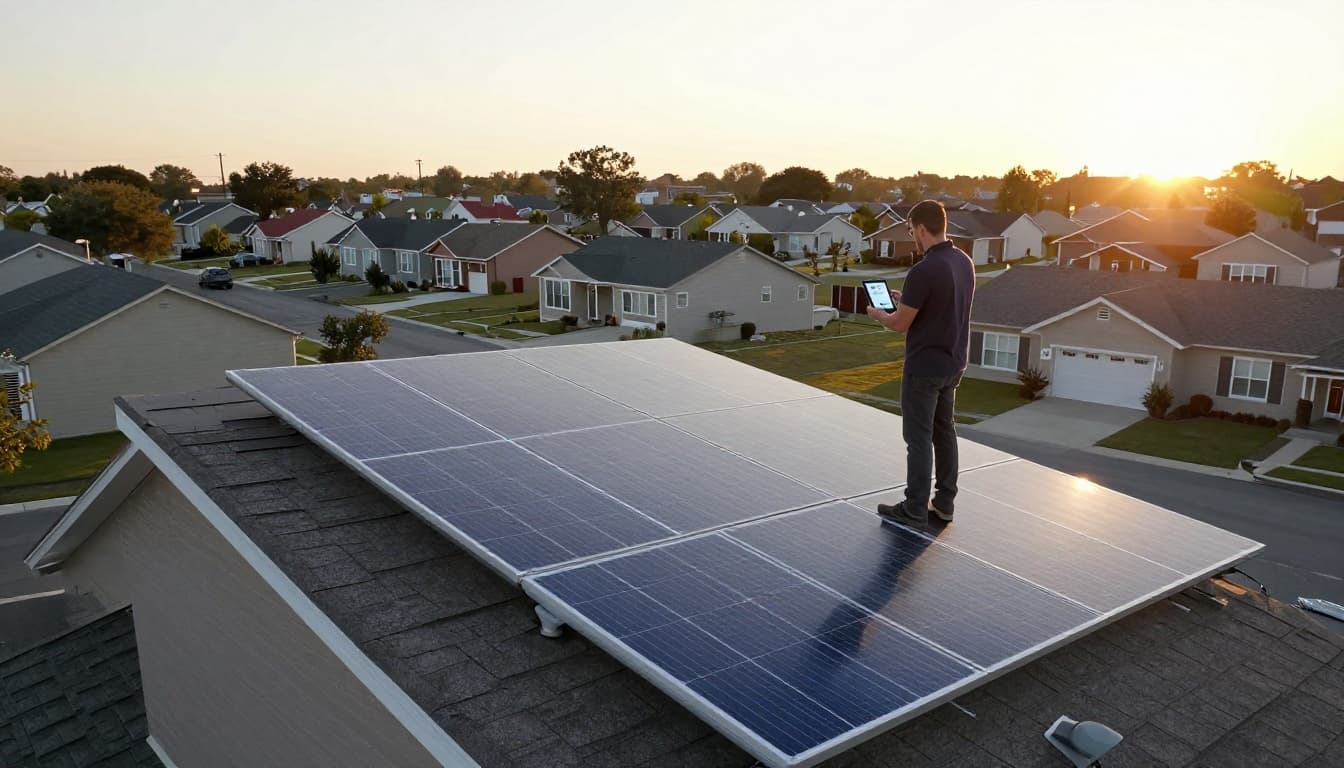
An installer verifying system performance on a rooftop solar jobsite.
Tigo Energy (Nasdaq: TYGO) sells hardware and software that help solar systems work better and safer. In plain terms, it focuses on three things: panel-level optimization and monitoring, rapid shutdown safety (so firefighters and installers can work with less risk), and home energy storage that keeps power on when the grid goes out.
This Patriot Roundtable Analysis style overview is written for investors who want the story without the fluff. It covers what Tigo does, where revenue comes from, what's driving growth, what could go wrong, and what to watch through 2026. If you've seen small-cap solar stocks swing hard, you already know the stakes. The goal here is to separate the business fundamentals from the day-to-day noise.
What Tigo Energy does, and how it makes money

Solar electronics moving through distribution, where accurate fulfillment and inventory control matter.
Tigo Energy has been around since 2007 and is headquartered in Los Gatos, California. The company builds products that sit close to the solar module (panel) and help manage performance and safety. It also sells home storage equipment and software tools that bring the system together.
Tigo's go-to-market model is practical. Instead of selling direct to most homeowners, it typically sells through distributors and solar installers. That matters because installers influence what equipment makes it onto roofs. Win installer trust, and repeat orders can follow.
Geography also matters. Tigo operates across Asia, the Americas, and the Europe, Middle East, and Africa (EMEA) region, with Europe and the Americas called out as major revenue contributors in the research provided. That mix can help, but it also exposes results to local demand cycles. A slow quarter in Germany, for example, can show up quickly.
The product lineup can be grouped into two buckets:
- Module-level power electronics (MLPE) for optimization, monitoring, and rapid shutdown safety.
- Solar-plus-storage gear and software, including the GO Energy Storage Systems (with pieces like batteries and inverters) and an Energy Intelligence platform for monitoring and forecasting.
A recurring theme is open architecture. Tigo markets its ecosystem as compatible with a range of third-party modules and inverters. For investors, that's more than marketing language. It can reduce friction for installers who don't want to be locked into one vendor's stack.
MLPE explained in plain English, and why it matters for solar systems
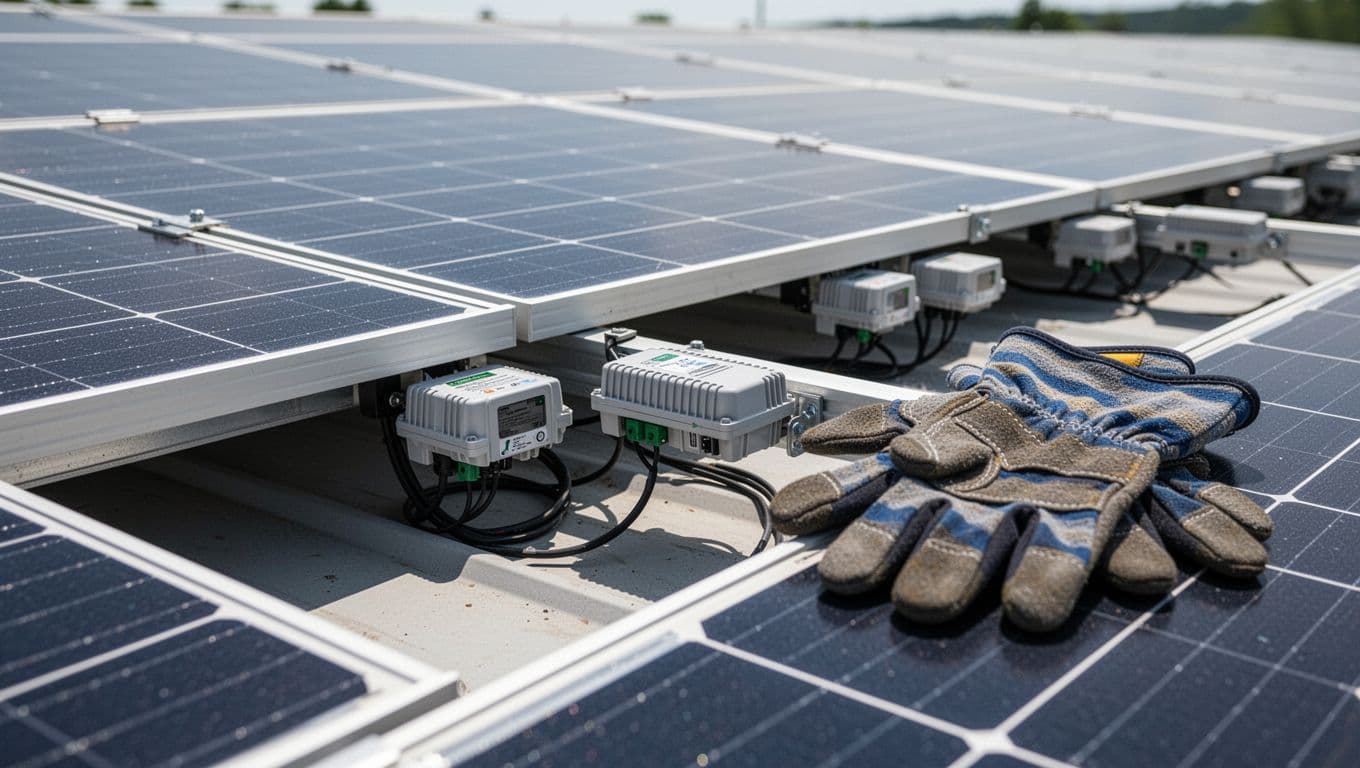
Module-level electronics mounted under panels, where optimization and safety features live.
Think of a solar array like a string of holiday lights. If one bulb acts up, the whole strand can look dim. Traditional solar setups can behave a bit like that because panels are connected in series strings. Shade, dirt, or mismatch between panels can drag down the group.
MLPE helps by managing output at the individual panel level. Instead of guessing what's happening across the whole roof, the system can spot which module is underperforming. That can improve energy harvest over time, especially on roofs with partial shade or mixed panel conditions.
MLPE also plays a safety role. Rapid shutdown requirements in many markets are designed so systems can drop to safer voltage levels during emergencies or maintenance. For installers, this isn't a "nice-to-have." It's part of doing compliant work and limiting liability.
From an owner's standpoint, the value tends to show up as:
- More consistent output when panels don't match perfectly.
- Better visibility into performance issues, so problems get fixed sooner.
- Fewer surprises, because monitoring can catch failures early.
Installers benefit too. Better diagnostics can mean fewer truck rolls and fewer awkward "your system isn't producing" calls.
Energy storage and software, how GO and Energy Intelligence fit the story
Solar alone is great when the sun shines. Storage changes the value proposition because it adds control. With a home battery system, owners can keep essential loads running during outages, shift usage into peak price hours, or store midday solar for evening demand.
Tigo's GO Energy Storage Systems target that solar-plus-storage bundle. The company also points to software, including an Energy Intelligence platform that supports monitoring and forecasting, plus forecasting tools that help predict consumption patterns. In addition, recent company updates highlighted improved commissioning software aimed at making installations faster, especially as storage adds steps and complexity at the jobsite.
Open compatibility shows up here again. A storage and inverter stack that works with more than one panel brand (and more than one inverter option) can make life easier for installers who deal with supply swings. For investors, that flexibility can widen the addressable customer base, as long as support and reliability keep pace.
The bull case for TYGO, what is driving interest in the stock

The bullish argument starts with the turnaround in results. Based on the provided data and recent reporting, FY 2025 revenue reached about $103.5 million, up roughly 91.7% year over year. Even more important, the company dramatically improved profitability versus a very weak prior period. FY 2025 net loss narrowed to around $1.9 million, compared with a far larger loss the year before. In Q4 2025, Tigo reported net income around $11.7 million, a sharp swing from a loss in the prior-year quarter, alongside revenue growth in the mid-70% range.
Those numbers matter because solar hardware companies often face ugly cycles. Inventory write-downs, pricing resets, and channel digestion can crush margins. So when you see a quarter with stronger gross margin (mid-40% reported for Q4 2025) after a year that included heavy inventory issues, investors pay attention.
Expectations for 2026 are also part of the appeal. The research provided frames 2026 growth as dependent on hitting a mid-to-high 20% revenue growth range. Analyst expectations cited in the real-time results implied a 2026 revenue level around the high-$120 million range, which lands in that neighborhood. It's not a promise, but it sets the bar.
Then there's the market structure. Battery attachment rates in the United States have risen quickly in recent years, and U.S. storage installation hit record levels in 2025 (with a large quarter cited at 5.3 GW installed). That backdrop supports companies selling solar-plus-storage components and the software glue that ties it together.
When installers standardize on a workflow and a set of compatible parts, repeat purchasing can become habit, and habit can look a lot like a moat.
Growth, momentum, and what the latest numbers suggest

PMR's snapshot characterized TYGO with strong momentum and positive earnings revisions. In everyday terms, momentum means the stock has been trending up because many buyers keep stepping in. Revisions reflect analysts nudging forecasts higher, often after better-than-expected execution.
In the PMR data, the one-year price move was extreme (triple-digit gains were cited), which can happen when a small-cap stock climbs out of a deep hole. It also means expectations can reset fast. A stock can go from "left for dead" to "priced for perfection" in a hurry.
Valuation signals look mixed, which fits that pattern. PMR flagged a high price-to-book multiple versus sector norms, while also pointing to a forward EV-to-sales figure that didn't look wildly out of line. Another way to say it: some metrics look expensive, others look merely optimistic.
A simple view of the recent fundamentals is shown below.
| Metric | FY 2024 | FY 2025 | What changed |
|---|---|---|---|
| Revenue | ~$54.0M | ~$103.5M | Demand rebound and channel recovery drove a big jump |
| Net income (loss) | -$62.7M | -$1.9M | Loss narrowed sharply after prior-year issues |
| Adjusted EBITDA | -$43.1M | ~$4.6M | Improved operating performance and margin recovery |
The takeaway is straightforward: the business showed it can grow and stabilize at the same time. Now it has to prove it can do that consistently.
Open architecture as a competitive angle against bigger solar rivals
Tigo plays in a market with well-known names. SolarEdge is frequently viewed as a core competitor in MLPE. Investors also compare the space to Enphase's approach, plus a wide set of lower-cost players that can pressure pricing.
Tigo's "open" approach is the counterpoint to closed ecosystems. Installers often face supply constraints, customer preferences, and utility rules that differ by region. Compatibility can reduce headaches, because the installer can mix components without redesigning the entire system around one brand.
Recent updates also point to practical steps behind the positioning. Tigo has highlighted broad inverter and module compatibility and has pushed software improvements meant to reduce time spent commissioning systems. In Europe, it's showing up at major industry events and expanding installer programs, which suggests it's trying to meet installers where they already are.
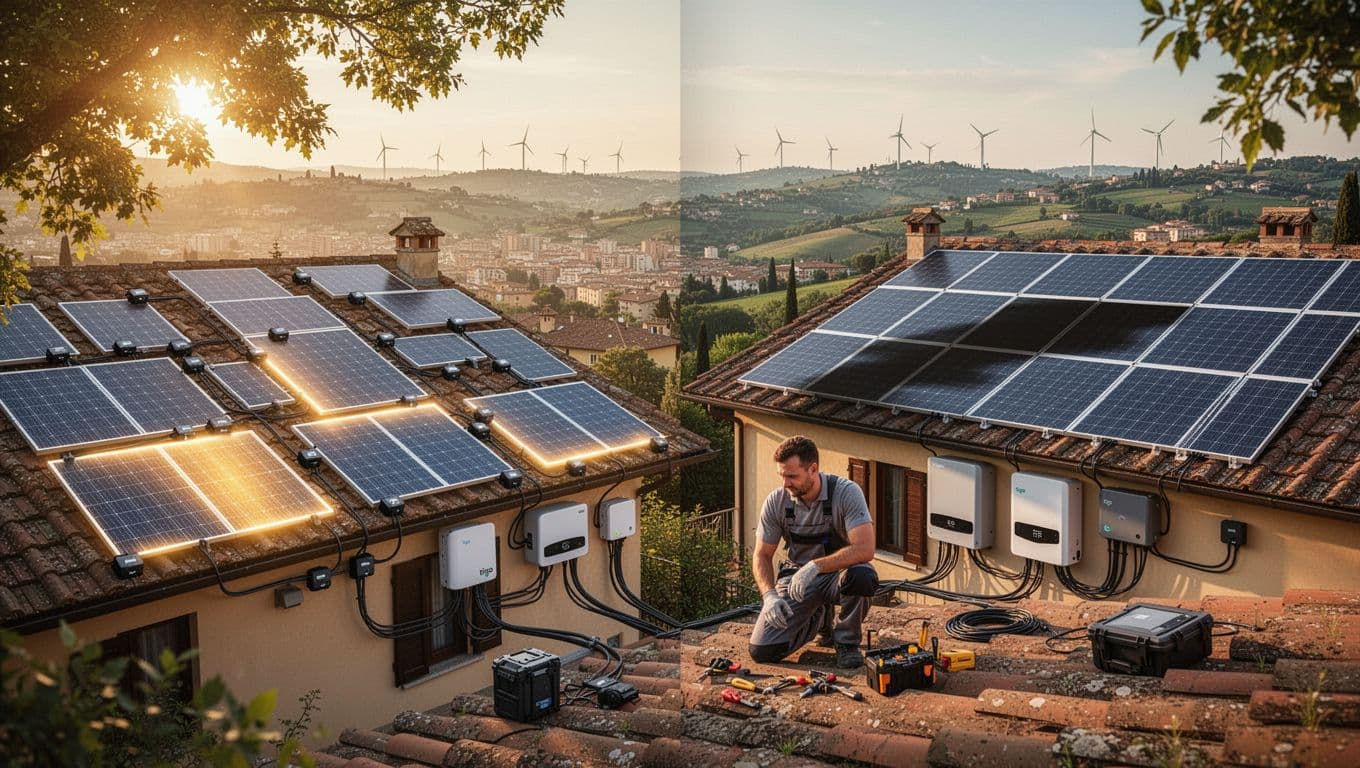
There's also a performance angle. In Italy, Tigo has cited field results for its MLPE devices showing meaningful energy recovery on certain residential system sizes, with a portion of systems seeing double-digit gains. Real-world performance claims always depend on site conditions, but they fit the core logic of MLPE on shaded or uneven roofs.
The bear case, what could derail the story in 2026

The bearish argument isn't hard to outline. Solar hardware is a tough business, and 2026 has clear trip wires.
First, near-term demand can wobble, even in attractive markets. The PMR notes raised concern about seasonal softness in places like Germany and Italy, which can pressure Q1 expectations. Europe also has intense competition and price sensitivity, so even small slowdowns can squeeze gross margin.
Second, Tigo has to clear a very visible growth hurdle. The provided research stresses that the stock's story depends heavily on meeting a projected 2026 revenue growth target in the high-20% area. If growth lands meaningfully below that, valuation can compress quickly.
Third, the balance sheet and funding path matter. PMR highlighted cash decline tied to debt repayment, followed by a capital raise to support working capital. That sequence is common in turnarounds, but it creates a real investor trade-off: more liquidity today can mean more dilution tomorrow.
Finally, profitability remains a work in progress. PMR's sector comparison showed profitability metrics lagging peers, including an EBITDA margin that trailed the sector median, even while asset efficiency looked better than average. That mix can be fine during a growth phase, but it leaves less room for mistakes.
A few risk categories deserve repeat attention:
- Execution risk: product reliability, warranty costs, and installer support can surprise to the downside.
- Pricing risk: aggressive competitors can force margin concessions.
- Channel risk: distributors can cut orders fast if inventory builds.
Profitability and cash, why growth alone is not the finish line
Revenue growth is loud. Cash generation is quiet. Investors need both.
Tigo's results show a meaningful rebound, yet profitability ratings in the PMR snapshot were still weaker than many peers. That fits a company transitioning from recovery into scaling. Even if unit economics improve, operating expenses, warranty reserves, and support costs can rise alongside volume.
Cash is the second half of the same story. When a company pays down debt and then raises capital, it can stabilize operations, but it can also reset the share count. That's why dilution risk stays on the checklist for small caps, even when the business is improving.
Keep an eye on a few simple signals each quarter: gross margin direction, operating expense discipline, inventory levels, and cash from operations. If those move the wrong way while revenue rises, something is off.
A fast-growing solar company can still be a weak stock if it can't turn sales into repeatable cash flow.
Market and policy risk, from interest rates to solar demand swings
Tigo doesn't control the backdrop. Interest rates influence solar loan payments. Policy changes can speed up, or slow down, adoption. Trade and tariff headlines can also move component costs and buyer behavior.
Sector sentiment matters too. Small-cap solar names can react sharply to guidance updates, channel commentary, or competitor pricing moves. Even short-term changes in Germany or Italy demand can ripple through European distributors and show up in quarterly prints.
In other words, TYGO can execute well and still see volatility. Investors should plan for that reality instead of being surprised by it.
Conclusion: What to watch next for TYGO investors
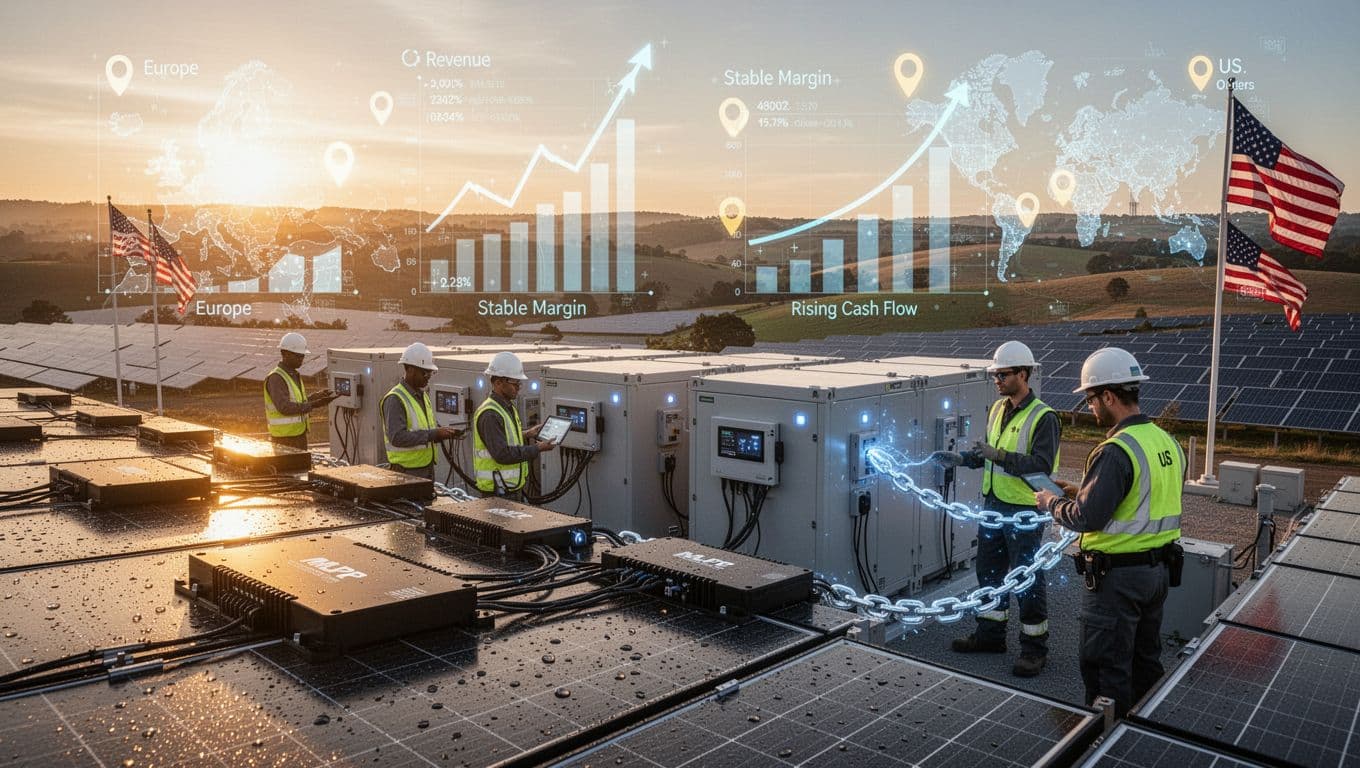
Tigo Energy's 2025 turnaround put it back on many investors' screens. The combination of MLPE safety and optimization, plus solar-plus-storage products and software, matches where the market is heading. Still, this story needs follow-through in 2026, especially because expectations now sit much higher than they did a year ago.
Here's a practical checklist to track after each update:
- Revenue growth vs. 2026 targets (watch for mid-to-high 20% pacing, not just one strong quarter)
- Margin trend (gross margin stability and EBITDA direction)
- Cash balance and dilution risk (offerings, working capital swings, and share count changes)
- Europe and U.S. traction for storage (orders, installer adoption, and commissioning ease)
- Evidence the ecosystem is sticking (repeat installer demand and compatibility wins)
This Patriot Roundtable Analysis is for education, not financial advice. If you're following TYGO, the next few quarters should answer one question: can Tigo turn a rebound into durable performance?
When you subscribe to the blog, we will send you an e-mail when there are new updates on the site so you wouldn't miss them.